How to get over your mid-life crisis

Last week my midlife crisis ended. Just like that, from one day to the next. It was ushered out with great fanfare while I was surrounded by friends and family at a Mexican restaurant in New York City. Everyone toasted to my health, we drank margaritas, ate delicious burritos and fajitas and took lots of photos. I particularly like the one of me in an enormous black and gold sombrero blowing out the single candle stuck into a small lump of flan. People came out of nowhere and started singing and clapping. The next morning I woke up and my midlife crisis was gone.

You may have figured out that it was my birthday. And the reason my midlife crisis is gone is that I am no longer middle aged. Last week I celebrated my 60th birthday and (to misappropriate Sartre) I have entered the infancy of old age. I’m trying to digest the fact that I am now old. I continue to fret about health issues, my career, my marriage & family, and the long bucket list of things to do while I still can. But it’s different now. I feel like a huge burden has been lifted. Being 60 makes me feel free to do what I want without apologizing. Skip dinner to keep working on my memoir? Sure. Head off to the beach for the weekend with a good friend from college? Why not? Buy a $200 pair of shoes? I’ve worked hard for my money, and I can finally spend it on a luxury item. I’m fortunate that my husband is supportive of my pursuits. We’ve weathered the middle-aged storm together and, like victims of a flood or fire, we’re looking around for the best of what we had together to take into the future. Most of what we had is good, and now we can leave behind what wasn’t.

After a lifetime spent fulfilling other people’s expectations, my time has finally arrived. I no longer feel guilty about going in my own direction, sometimes alone, sometimes with others. I no longer have patience for people and situations that drain my energy and make me doubt myself. I am grateful to be surrounded by good colleagues, caring neighbors, and friends and family to help me take the baby steps into old age. Just as new parents coo and clap when their baby learns a new skill, my social network is cheering me on, sometimes literally – as they did at the Mexican restaurant. I know it’s a cliché but “we’re not getting older, we’re getting better” is really true.

My advice on how to end your midlife crisis is this: find people who support your crazy ideas and reach out to them as often as possible. Stop focusing on your imperfections and start taking steps toward one goal on your bucket list. For me, my goal was finishing my memoir and taking it to New York to try to find a literary agent. I pitched it to eight agents at a conference, and all of them would like to see my manuscript. I think good things come to those who are plodders. I’ve worked on this book for nearly five years while teaching full time, coaching a rowing team and raising two children. Writing was always a secret passion of mine, and now I’ve got a finished book and a blog where I can write whatever I want. Maybe somebody will read it and be inspired.

Just as an infant takes baby steps before learning to walk, I am taking baby steps into publishing. I’ve kept a diary or journal all my life. It’s a new experience to share my thoughts and opinions with others. I am thrilled to realize the power of my words. I’ve had a lifetime of hiding my truth because I didn’t think anybody would be interested. What turning 60 has taught me is not to be afraid of being judged by others. I have something to say and I’m putting it out there. I don’t expect singing and clapping, but I’m kind of enjoying this second childhood.

“I wrote in order to write. I don’t regret it; had I been read, I would have tried to please. I would have become a wonder again. Being clandestine I was true.”

– Jean Paul Sartre

13920694_10206766994356357_1459861183231425224_n

Why ignore champion women rowers?

While most of America is focused on the darling gymnasts and the freakishly talented swimmers from my great state of Maryland, there’s almost no coverage of America’s greatest athletic success story: the U.S. women’s rowing team! For 10 years the women’s coxed Eight has dominated international competition. In this this wonderful New York magazine article there’s a complete story about their wins. But there’s almost no coverage of their phenomenal racing during the Olympics. What gives? Is this more of the sexism that’s been on display? Like the Chicago Tribune story that, instead of reporting on the Bronze Medal winner’s success, mentioned her only as the wife of a Bears football player.

I’m proud to be a long-time member of U.S. Rowing. I’m old enough to remember when it was the National Association of Amateur Oarsmen, but fortunately that name changed as more and more women poured into boathouses and insisted on equal treatment. Why hasn’t the coverage of women’s sports on network TV kept up with the times? Is it because they’re not wearing sparkly outfits? Come on, NBC, you can do better!

Speaking of outfits: one of my coaches participated in the 1976 Olympics, the very first one that allowed women to compete in rowing. In one way, we’ve come pretty far: she told us that their uniforms for the Opening Ceremony consisted of a purse and a hysterically funny and anachronistic undergarment – a girdle! Can you imagine asking Olympic rowers to wear something designed to hold in a fat stomach?! It makes me angry to think that our news coverage hasn’t gotten much past this era.

I am so proud to be part of a sport that offers such powerful, confident women a chance to compete and dominate on the world stage. I know that they don’t look anything like me – or like most Americans, for that matter – but they are my heroes. I have some idea what it takes to get to their level (and I don’t mean height), and I wish that they were getting the respect that they deserve.

So here’s to Katelin Snyder, Amanda Elmore, Eleanor Logan, Meghan Musnicki, Tessa Gobbo, Lauren Schmetterling, Emily Regan, Kerry Simonds, and Amanda Polk.


Boys in the Boat

When I first rowed in college (1978), people said our boat had been in the 1936 Olympics. At the time I thought it was a joke, but now I’m not so sure. We were a ragtag startup team at WVU. We kept our shells in an old tractor-trailer truck behind the lumberyard on the Monongahela River. That thing was so heavy that our old coach made the men carry it for us! Of course, that could have just been because he was 70 years old and didn’t have a clue how to coach women – it had never been done before!

I’m excited that The Boys in the Boat is coming to PBS on August 2nd, just in time for another Olympics. I read The Boys in the Boat by Daniel James Brown when it first came out in hard back. The oddly-stylized first 50 pages really annoyed and distracted me – as if Brown were writing a 1930’s news article instead of a book for a modern audience. It was also clear to me that he wasn’t a rower. But the story is so compelling and well told that I slogged through – and was immensely rewarded. Back then rowing was still the sport of gentlemen, and the strapping young loggers and woodsmen of the Northwest had a distinct advantage over their elite East Coast rivals. After all, it was only 16 years earlier that Jack Kelly, the father of famous actress Grace Kelly, was excluded from the Royal Henley Regatta in England because he was a bricklayer. It didn’t matter that he had won dozens of U.S. Championships; the fact that he was a manual laborer was enough to ban him from the regatta.

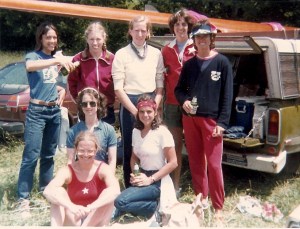
When I first started rowing it was still very much a sport for men, but things were changing rapidly. I moved to Washington DC in 1979 and joined Potomac Boat Club on the Georgetown waterfront. We had a small bathroom, but no showers or lockers for women were available, not yet. There was one group of women already rowing there; they had all graduated from Ivy League schools, where Title IX had guaranteed some access to the sport for women. They were much better than my motley crew of WVU graduates and friends of friends. I used to telephone about 20 people every night just to get enough young women to put together an Eight for the next morning. The women already rowing at Potomac Boat Club didn’t talk to us for two years – not until we announced that we were planning to race at the Head of the Charles in 1981. We hired a coach, added to our practice schedule and improved so much that we combined forces with the MIT-Georgetown-Wellesley alumnae for my first races after college. To prepare for Masters Nationals, we often practiced twice a day. I didn’t own a car, so I biked down to the boat club at 5:00 am, worked eight hours, biked back down to row in the evenings, then biked home through Rock Creek Park, straight uphill to my house on Military Road. I was in really good shape. Rowing was my life for an intense two years. Then in 1982 I joined the Peace Corps, moved to West Africa and didn’t row for another 18 years. Rowing has shaped my life.

Potomac Lights at Masters Nationals, 1982


Be careful what you ask for

This summer I’ve had the good fortune to get everything I’ve asked for. I really shouldn’t complain, but I am so busy now that the summer is flying past and I haven’t even been to the pool once! The To Do list hasn’t gotten any shorter and I’m almost in panic mode. So I’m taking a deep breath, metaphorically, to tap into an overwhelming feeling of gratitude.

First, I was able to spend two entire, uninterrupted weeks with my mother in West Virginia. She is elderly and getting more forgetful and frail. I cooked dinner, planted flowers in her front yard, and I fed the neighborhood cats that gather on her back porch. These little things make her so happy. We drove along the Ohio River up to Point Pleasant, where the Silver Bridge famously collapsed in 1967 following all sorts of paranormal activity. We went to the Mothman Museum and she was a good sport, posing with a 6-foot black figure with red eyes just for a good photo opportunity. Every moment I spend with my mother is a gift. What is it about trying to help other people that makes one feel so content?

Second, I was given a summer organizing job I applied for with the teachers’ union. It’s something that I truly support – going out and having conversations with new (and not-so-new) teachers to find out what makes them tick. I used to be in advertising sales, so meeting with people and listening to their stories comes naturally to me. Who knows what will come of these collective conversations? But I met a guy who lives in my neighborhood – on my street! I didn’t know him before and now I do. If nothing else, at least I can say hi when I see him around. I value the face-to-face interactions that become so difficult once the school year starts.

Third, I asked to teach one English class next year. Instead of a class with new ESOL students with interrupted education, I’ll be teaching an Honors English 12. I’m really excited and, I’ll admit, a little nervous. I’m rereading all the classics I’ll be teaching – Oedipus Rex, Hamlet, The Stranger. I’m looking forward to interacting with students who will actually read for homework, and aren’t afraid to share their opinions. It will help me grow as a teacher and a professional.

And finally, I’ve been asked to race on Saturday. I’m too out of shape to pull an oar through the water in competition, but I will be sitting in the coxswain seat tomorrow and taking charge of a 8x at Diamond States in Delaware. I’m excited and nervous because we might actually win and they’ll toss me in the water if we do. That’s better than swimming in a pool, isn’t it?

The way I look at it is, if you don’t put challenges out there to yourself – especially as you get older – then you risk getting stuck in a rut. I feel the clock ticking away the summer days, but each morning I wake up excited to start on something new.

Now I can cross one more thing off my To Do list.

So long, it’s summer!

Last week I said goodbye to all the students who have hung out with me for 10 months. It’s a bittersweet time of year for teachers because we develop such a strong bond with our students. I’ve graded final exams and I’ll go in this week to clean out my classroom.

But I am still reeling from what some of them wrote in their final essays about a moral or ethical dilemma they faced. After reading their exams I had to get up from my desk and walk around the building. Most high school students are exposed to dystopian plots by reading science fiction stories, but my students have lived through such things.

One essay that particularly stands out was written by an African girl whose best friend disappeared. Nobody knew what happened to her. She knocked on neighbors’ doors and searched the community. She couldn’t believe that her only friend in the world would run away. Three days later the girl was found, barely alive on the edge of town. She was naked and bruised and filthy. My student went with her to a hospital and was there when her friend’s family walked in. Her friend started screaming hysterically and pointing at her own father, saying “get him out of here!” The father was apparently part of a cult that was required to perform savage acts on virgins. He was arrested and thrown in jail, but bribed the prison guards to be released. Shortly after, my student immigrated to the U.S. and her friend moved to another country. Thank god they were able to escape such horrors!

Another boy wrote about a classmate of his, a young woman forced into marriage at age 15. The following year she had a baby but unfortunately her husband died. The village elders accused her of murdering the man, but my student did not believe his classmate was capable of such a thing and stood up for her in front of his grandfather. The elders decided that her punishment would be burying her alive up to her neck then stoning her to death. My student remembered a quote from a movie he’d seen about how all humans have rights, so he went to a priest to speak up for his friend. The priest convinced his grandfather and the elders not to kill her; the girl was exiled to another village with her baby instead. It was his courage to speak up that saved the girl’s life. It’s impossible not to feel the pain of a 15-year-old processing such a real and profound ethical dilemma.

And you thought Shirley Jackson’s The Lottery was fiction?

I’m glad I have the entire summer to recover and plan. What new dilemmas will face these students this summer? I think I will teach differently next year, and I will try to be more sensitive to the quiet students and encourage them to write about their experiences more regularly. I will be thinking about this all summer.


Teacher Appreciation Week

I got a lot of hugs on Friday and I don’t know if it was because of the MCPS Shelter-in-Place, Mother’s Day or the end of Teacher Appreciation Week. Sometimes my students surprise me in the most wonderful way. This letter was delivered after the bell rang. “Don’t read it now!” the student said. So sweet. I really do have one of the best jobs in the world.

Teacher Appreciation Week is over but I am still basking in the afterglow. I don’t usually get much attention from anyone on these days because my students are all immigrants and they haven’t quite figured out American customs. It makes this kind of letter even more meaningful.

Dear Ms. Sullivan, I just wanted to take a moment to thank you for being such a wonderful teacher. In your class I don’t just learn new things but also how to improve my English skills. Thank you Teacher. You are very special because thanks to you and other teachers that take the time to teach a new lenguage to new students. Thank you for having patience with us and also thank you for sharing your wonderful stories with us. Thank you for helping me with my homework. Thank you for letting me stay in your room when I couldn’t. Thank you for trusting me and most importantly thank you for teaching me what I know. You are one of a kind. Thank you for sharing your gift of teaching with us! We may not always say it but we always mean it! Happy National Teacher Appreciation Week! Sincerely, X

Student says thanks
Student says thanks

Teacher training for dealing with students who have experienced trauma

In This WAMU article , my MCPS colleagues are discussing new ways to deal with complex trauma in the classroom.

We have so many new students fleeing violence in Central America who arrive in this country to live in unstable families. It manifests itself in so many ways in the classroom.

It’s good to see that there’s training for it. Can we have more?


A Personal Challenge

When Yanis* showed up at my classroom door with her baby, I knew it was to say goodbye. I hadn’t seen her for three weeks and she’d completely missed final exams.

“Oh, can I hold him?” I gushed. She’d dressed him in a miniature bow tie and vest. He wasn’t even old enough to walk but he was wearing little booties that looked like wingtip shoes. I oohed and cooed at the little cherub.

“His name is Yannick,” she said, beaming at my reaction.

I know what kind of effort it takes to get a baby dressed and transported under the best of circumstances. When my son was born, I was in my thirties, married, with a new Master’s degree and a predictable life trajectory.

Yanis was 16.

“We’re moving to Miami, Miss. And I don’t want to go,” she said.

The streaks of blue in her hair matched the mischievous streaks of her personality. On more than one occasion she had come in late after lunch with two miscreant boys, a little too broad a grin, and a humility that completely disarmed me. “Sorry miss,” she apologized and sat down. She had bloodshot eyes and an adorable gap in her teeth when she smiled.

I couldn’t think of what to say to a teen whose life was so full of drama and instability, so I stuck to the script.

“I want to see pictures of you in a cap and gown, holding your diploma.”

When my son graduated from high school he’d already been accepted into six different universities. I wondered what lay ahead for a 16-year-old mother and her baby.

Yanis was one of the more promising students in my remedial reading class. She wrote with an enviable clarity that exposed the emotional truth of a story. Once she wrote on the topic, “Overcoming a personal challenge.” She described her move to the United States from El Salvador two years earlier.

Her father and the grandmother who’d raised her brought her to the airport to say goodbye. She thought she was going to be gone for a month, visiting her mother in Maryland. She hadn’t seen her mother since she was seven years old. Her grandmother was sobbing and Yanis didn’t understand what the big deal was. “Mi hija,” said her father. “This isn’t a vacation; you’re moving to the United States permanently.” Yanis boarded the plane by herself, in shock and disbelief.

Yanis wrote about the fights she had with her mother – typical teenage arguments about clothing, boys and staying out too late. But magnified by the fact that she and her mother were almost total strangers. Her story was so powerful that I asked her to rewrite it for the school literary magazine. I was impressed by how she could produce such good work with so little effort. When I write, it takes me forever to revise a paragraph. And people still tell me to “dig deeper” to express my feelings more. Yanis seemed eager to please me, and made a half-hearted attempt. But she didn’t have the motivation to follow through this time. Now she was moving away.

Every year I have a student like Yanis who steals my heart. My life moves forward on the projected path as I struggle to capture my tiniest drama in writing. So I am telling her story instead of my own.


* not her real name

Am I less valued because I teach low-income students?

Here’s another great voice for the need to support teachers of low socio-economic-status students in this EdWeek article. Bruce Hansen mentions that when he received the “golden apple award” his colleagues assumed that he would pursue an easier job at a school in a high-income district. He may feel guilty, but that’s exactly what he did. “There’s a perception that really good teachers work in schools that cater to students from wealthy families,” he writes. He recommends that teachers get special training “from university educators,” who develop specialized techniques and curricula. But the reason Mr. Hansen left his job has nothing to do with curriculum or training. He left because he did not receive enough support.

I’ve been teaching high-poverty English Language Learners for 15 years and it’s both rewarding and exhausting. When students are so needy every day, it can be emotionally and physically draining. We don’t need more university educators telling us what to do.  We need compassionate administrators who understand what it’s like to “work in the trenches.” We need a network of like-minded teachers and student counselors who can prevent us from being traumatized by the traumas of our students. At the end of the day, I can get in my car and drive back to my leafy suburb. It’s important for teachers of high poverty students to be mentally healthy.

Unfortunately many low-income schools are where new principals get placed to learn the ropes before moving on, where teachers involuntarily transferred land, and where there’s high teacher turnover and little administrative support. I’m proud to say that this practice is not prevalent in my mixed-income school. However, I definitely get a feeling that I count less than teachers of AP and IB students heading to Harvard. My administrator has never set foot in my classroom to give his famous Timeline speech, in spite of my annual plea to come for a visit. However, he is very supportive in other ways. And that makes all the difference.

I also have a union that backs me up at the district level, full access to excellent training resources, and local leadership that listens to teachers and gives priority to education. Now if they could just add back that hour of time that Daylight Savings took away, I could get a lot more done in 24 hours.


ESOL Activists Asked to Clear Out

On Monday evening dozens of parents, teachers, counselors and advocates for English Language Learners showed up at the Montgomery County (MD) Board of Education meeting to support testimony on the questionable restructuring of the ESOL Department.  We so overwhelmed the board members that they asked us to move into the overflow seating in the auditorium.

My concerns are personal. Yesterday I covered a regular 9th grade classroom while the teacher was on a field trip. I could see a stark contrast between these students and my own. The 9th graders entered the classroom in an orderly manner, got their laptops and began working on their assignments before the bell rang. I had to quiet them down a little to take attendance, but everyone was working or talking quietly for the entire period. Three students asked, one-at-a-time, for passes to the restroom, and one girl braided another girl’s hair. In contrast, students in my class entered the room jostling each other, pushing, mock fighting (one guy grabbing the other around the neck), throwing things, shouting loudly, and sitting down with earbuds at an empty desk — no folder, no book, no notebook, as is (supposed to be) our routine. One student turned the light on and off to get attention, another went directly to the heater by the window and sat on it, checking his phone. They didn’t hear me after the bell rang when I asked them to get their folders and sit down.

Social-emotional learning is one of the most critical areas of need for ESOL students, especially those with interrupted formal education. I teach high schoolers from Central America who have a 5th grade education. They do not know how to be students. In addition, many are dealing with family-reunification issues: They have just arrived in-country to live with mothers or fathers whom they haven’t seen in years. While they are adjusting to a new family, new food, a new house and a new country, it is my job to teach them academic language. But they need so much more. That is why I am worried about the changes in the county ESOL program. Who will guarantee that my students’ needs are being met? We need more bilingual counselors, more Parent Community Coordinators who can visit homes and meet with families. We need a sensible pathway to careers for students who may not make it to college. We need a serious drop-out prevention program, like paid job internships that also give course credit. (I would love to coordinate such a program!) We need less emphasis on graduation in four years. Many ESOL students require more time and direct instruction to become proficient in English. We need fewer standardized tests and less disruption to our weekly schedules. (Thank you state legislators — it looks like we won the Less Testing battle!) We need cultural competence training  like this program for regular classroom teachers.

This video shows all the homemade signs we brought to the Board of Education meeting on Monday evening. They say, “I stand for students,” in the different languages – Spanish, French, Amharic, Vietnamese, Haitian Creole, etc. that our students speak. We are worried that the changes in the countywide ESOL program may mean that critical services will be cut.  I had no idea what to expect when Kristen and Margarita asked us to support them and their testimony. Our strong concerns were voiced. “I stand for students” was more than a slogan. We spoke up for the most vulnerable and at-risk students in Montgomery County Public Schools. Now it is up to our elected officials to take action.

I am proud to live in a state that takes care of its students and invests in their future. I am optimistic that our voices have been heard.