Dime qué hacer

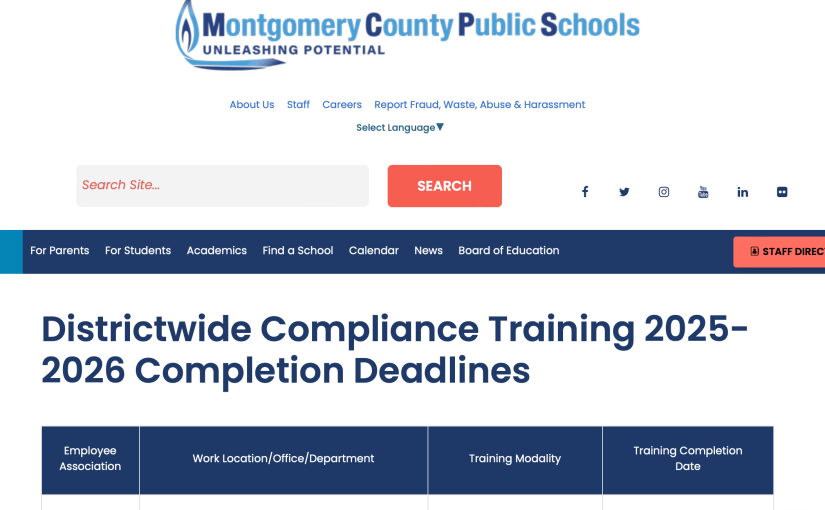
A yellow sticky note is taped to the beige cinderblock wall near my desk. On it I’ve written the names of six online compliance trainings that I need to finish: WiDA Screener training (paper?), Level 1 Health Awareness, Level 1 Substance Abuse, Handle With Care, MCPS Test Security, PSAT Test Security. I cannot remember the deadlines for any of them, but I know I’m running out of time.

The PSAT training gave me a “test out” option, which I appreciated. But I failed. Now I have to take the entire online course. But I can’t remember which platform it’s on: Performance Matters? Canvas? Is it through PDO or do I access the program via a link buried in a slide inside an email? Who sent the email? What date? Who can I ask?

My school has pushed out the deadline for SLOs (Student Learning Objectives). I know it’s coming up soon, but I haven’t even talked about it once with my co-teachers. Since we’re teaching the same students, shouldn’t we be using the same template? Only because I happened to be in the office when my RT (Resource Teacher) walked through did I hear any guidance. She said that since the school focus was on the four language domains (Listening, Speaking, Reading, and Writing), that co-teachers should each focus on a domain. Glad to have a reminder of the school SIP. School Improvement Plan.

Last Monday, my RT held a department meeting and shared with all ELD teachers that we were going to complete the fall paperwork by ourselves this year and it’s due on October 1st. That’s 4.5 days to complete an onerous amount of paperwork that we had nothing to do with last year because their predecessor did most of the busywork herself. In fact, in my 25 years in MCPS, I’ve never had to print all the documents by myself.

Log into Synergy, find your students, upload the Parent Notification Letters. Print the PNLs, sign the PNLs, make three copies of each one. Give them to all your students, even if they’re getting the exact letter from another teacher in another class. Log the dates that you distributed the letters for parent signatures. Three times each. The photocopiers are never working. Wait. Synergy is down again. And my school-issued laptop won’t hold a charge. I have to leave school because my frustration level is peaking. A colleague walks in crying because of the pressure. I stay to comfort them.

Now the EL Plan, the English Language Plan, with official Accommodations for each student. There’s no list of students. We have to use our roster from Synergy to search for each student individually. Then click a bunch of drop-down menus with grade level, type of accommodations. Don’t forget to save! Then once it’s saved, you click on “Details” and actually check the boxes with accommodations. Open a new tab each time. This year we were advised to give bilingual dictionary accommodations only to Level 1 and Level 2 EML students. In the past everyone got this accommodation and extra time. Now I have to go back and check all the proficiency levels for all my students.

Do I have to complete a form for the No-Show students who are still on my roster?

I’m trying to focus on piloting a new curriculum in two of my ELD 3 Seminar classes, making slides, grading work in a timely manner, working with two new co-teachers who have never taught English 12, a new RT and five new colleagues all asking me what we’re supposed to be doing. We just finished Interims. But there’s not a moment to relax.

Several administrators from DELME Central Office will be visiting our school tomorrow, including the new Associate Superintendent for the Division of Multilingual Education, the DME division, pronounced “dee-may” like the Spanish word for “tell me.” The MCPS website can’t even keep up with all the acronym changes. ESOL, EML, ELD, SLIFE. Yet they expect me to keep up with all the paperwork, even when the deadline notification has probably violated my contract.

They want to see what’s going on in the classroom. But I want to talk to them about the ridiculous requirements for ELD teachers outside the classroom. I don’t want to be that teacher who always complains. But if I don’t speak up, who will?

DME. Dime! Tell me. What should I do?
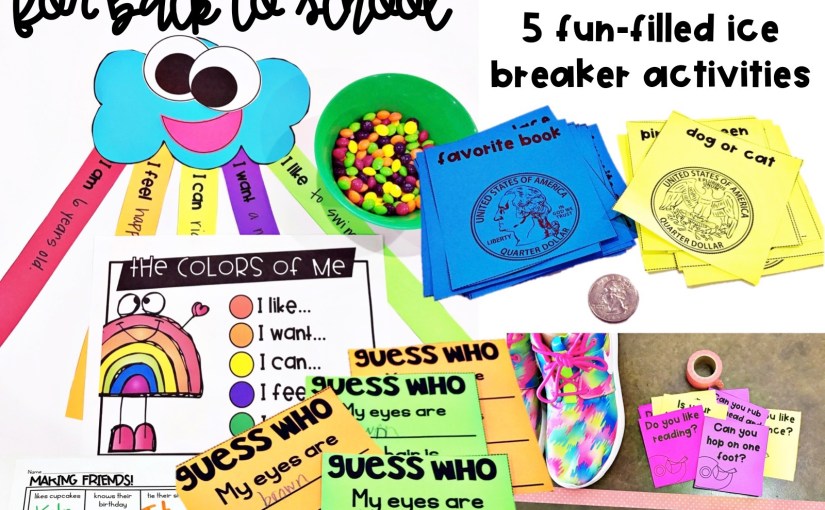
Are ICEbreakers appropriate for EML students this year?

The school year has gotten off to a quiet start, against the most horrifying backdrop imaginable for immigrant students in the English Language  Development (ELD) program (formerly called ESOL). Images on the news show ICE agents throwing black and brown men to the ground and leading them away in handcuffs, disappearing them to unknown destinations, where due process is almost nonexistent. Law-abiding residents just going to work. The families and neighbors of my students targeted by armed men in masks.

I teach at one of the largest high schools in the state of Maryland, with a student population that’s 60% Hispanic, and about 25% actively enrolled in our ELD program. After sitting through a week of Pre-Service teacher meetings where not a single mention of immigration was made, I sent an email message to my supervisor pointing out my concerns that students might face unusually high levels of anxiety and fear as they come back to school this year. And maybe we could send an email to the entire staff. And share the robust MCPS web page for Immigrant Supports

I even mentioned that the typical classroom ICEbreakers might be triggering for some students.

Instead of support, I got called in to my supervisor’s office and reprimanded for sending out a “political” message using school email. Apparently now it’s “political” to express concern for EML students.

Is it that my supervisors are low-key MAGA enthusiasts? Are they afraid? Do they just not want to be inconvenienced? Why would someone in charge of a program comprising 100% immigrant students not be on the side of our students? Of their teachers and staff? (as an aside, one of my colleagues, whose spouse was born overseas, says he takes his U.S. passport with him to take out the trash so that he won’t be arrested). We are living in an era where our government is turning against us.

I am deeply distressed that school leaders have ignored my concerns and are trying to pretend that everything is normal. Even worse, they told me, “You need to be careful. I don’t want you to get in trouble” WTF?! I was pointing out that we need to be aware of pressures our students were facing outside of school that could affect attendance, participation in school events, grades, and social-emotional well-being. Isn’t that important any more?

If this what the school year will look like for 2025-2026, then I’m not sure how I’ll make it through. I will follow school rules and be compliant at work, but outside of the duty day, I will use my teacher voice to exercise my First Amendment rights while I still have them, to speak out in support of immigrants, the people who actually keep our country running.

Even though the Department of Education has quietly rescinded the federal guidelines for students learning English, I will support my students, whatever their immigration status, for as long as I am able. Which may not be very long, at this rate.

Through a confidential source, I learned that the MCPS International Office usually admits close to 1,000 newcomer students every year. Last year, they admitted 850. This year, only 12.

I hope I’ll make it another year. Or at least until a time when choosing the right ICEbreaker activity is my biggest back-to-school concern.

The Upside Down

In just a week, the new presidential administration has sent a wave of fear and shock into every DC area school. I teach at a school that’s 60% Hispanic, with many undocumented students hidden in plain sight. When I quietly handed out MCPS fliers on immigrant rights, printed in Spanish and English, nearly every student grabbed one. 

My students don’t talk about it with me. It’s my first year at a new school, and all my classes are co-taught. So we haven’t developed the kind of mutual trust that I am used to by this time of year. But my colleague who works with newcomer students said they were panicking. 

Violent January 6 criminals are granted blanket pardons while innocent children, many of whom are refugees from political violence, are at risk of deportation. I keep coming back to my mantra from the previous Trump administration: “This is not who we are.” But clearly, I do not understand my fellow Americans. Apparently we are a bigoted, anti-authority, xenophobic country.

We’re living in an upside-down reality, like an episode of Stranger Things.

I will do everything in my power to help my students. But I wish I could change the channel.

Spring Broke

With a nod to my friend Amy, I appropriate her lament for teachers on Spring Break this year. I didn’t have any money to spend on a trip to the Bahamas or Hawaii, which has turned my holiday into an inexpensive, productive, and fun week.

Being broke has an upside. I reached out to friends I haven’t seen in ages – including Amy, who I ran into while walking her dogs in Wheaton Regional Park. Then I met her for drinks at a sponsored event that several local elected leaders attended. Free food! Great way to catch up on each other’s news. We also shared our diverging answers to the question, “How are the kids these days?”

The kids are definitely better this year than last, but a lot of my seniors simply didn’t submit the in-class essay, the biggest grade of the marking period, even though they were given plenty of time, advance notice, and open-notes formatting. Several sat in class for two days with their heads down instead of writing. Amy teaches middle school and has different issues – disrespectful behavior from dysregulated students and social promotion policies that thwart any efforts to hold students accountable for showing what they’ve learned.

It’s been rewarding to cross items off my enormous To Do list. Dentist appointment, filing taxes, dealing with my son’s car insurance and maintenance ($$$). I’ve also spent a lot of time on school work: creating materials for a MCPS curriculum-writing project, meeting with that team, and grading student assignments. But the most rewarding aspect of my Spring Broke has been reconnecting with friends. Cherry blossoms, museums, and hiking don’t cost much in the DC area. I feel so lucky to have friends who like those activities, too.

A long-term sub in my department was asking about entering grades in Synergy (our online grading platform), and when I showed her what I do, she responded, “That’s so much work!” With just two more days left of spring vacation, I turn to all the unfinished tasks. Fortunately, my stay-at-home plans this year have allowed me to save money, make huge progress grading essays, and share many little fulfilling conversations that will sustain me as we push to the end of the school year. Oh! And I got to see some provocative art!

I have a dream

“It would be fatal for the nation to overlook the urgency of the moment.” MLK, 1963 speech

I have a dream that from my perch just 12 miles from the National Mall where Martin Luther King delivered his famous speech, my voice will make a difference. When I speak out, there’s always the possibility that I will be reprimanded or silenced like the four teachers in my school district placed on Administrative Leave for their social media posts this semester. I’m putting my dreams to the test this year.

While I am not vocal about my concerns for Palestinians, I speak up for English Language Learner students and for fellow teachers who support them. Sixty years since MLK urged fellow citizens to work together, we are still urging our leaders to work with us to preserve the dignity of our students. While Republicans in Iowa caucus for their party leader, they are vilifying immigrants who flee violence and persecution, hoping for a chance at the American Dream.

Fortunately, I work in a state that welcomes newcomers. I work in a district that supports English Language Learners. Yet, I speak out for conditions that need to be improved: curriculum that matches student needs, small-enough classes to support language learning, teacher workload that’s manageable, and more collaboration between administrators and teachers.

With the Blueprint for Maryland’s Future beginning to shape instruction across the state, now is the time to speak with school leaders and administrators. I am honored to be meeting with Interim State Superintendent, Dr. Carey M. Wright, as a member of Community WELL, a grassroots advocacy organization. We hope to open a dialogue that can help shape teaching and learning in the state of Maryland for years to come.

In addition, I am delighted to work with MCPS Curriculum and Instruction team to help provide differentiation options for EMLs in the Grade 10 English Language Arts curriculum material.

In the pit of my stomach, I’m nervous about speaking up. I’ve been invited into conversations at a higher level; I hope I represent my students and fellow teachers well. What if I say the wrong thing? What if they actually listen to me?

“We cannot walk alone.” (MLK, 1963)

Change happens

I subscribe to Richard Rohr’s Daily Meditations, which I often don’t have time to read. But this morning’s missive on Transitions spoke to me.

The word change normally refers to new beginnings. But the mystery of transformation more often happens not when something new beginsbut when something old falls apart. The pain and chaos of something old falling apart invite the soul to listen at a deeper level, and sometimes force the soul to go to a new place. Most of us would never go to new places in any other way…

Transformation always includes a disconcerting reorientation. It can either help people to find new meaning or it can cause people to close down and slowly turn bitter. The difference is determined precisely by the quality of our inner life, our practices, and our spirituality. Change happens, but transformation is always a process of letting go, and living in the confusing, shadowy, transitional space for a while. Eventually, we are spit up on a new and unexpected shore…

After two decades teaching in a public school, I feel the changes that students experience profoundly. April is huge month of transition. Just as flowers burst into bloom outdoors, seniors come alive again.

This Class of 2023 has already faced “confusing, shadowy, transitional space” that started at the end of their 9th grade year and extended into their entire 10th grade year. “Change happens when something old falls apart…” Well, their worlds fell apart. Now we have the greatest teen mental health crisis we’ve ever faced. But I’m not going there.

We had a job fair at school this week. It was a great real-life connection to what we were doing in class – researching career options, creating resumes and cover letters, and preparing for “job interviews.” I thought students would be enthusiastic about the job fair. Instead, a collective meh! greeted the announcement.

I know that many are finalizing their college choice by May 1st (tomorrow is Decision Day). Many are already working or have summer jobs lined up. Once we got downstairs to the fair, I was glad to see that students went from table to table and talked to the recruiters. Afterwards I realized they were just collecting free pens, candy, lanyards, and key chains. Meh!

With just one month left of school, I feel the tide rising and lifting all ships. Senior Assassin and Promposals are in the air. In English class, I hear excited chatter as girls show each other their prom dresses. “Ms. Sullivan, which color do you like?” D. showed me a muted pink suit he’s about to purchase. Kids in team jerseys announce that varsity sports are moving to season’s end. Chronically absent students are returning and asking what assignments they’re missing. 

The rhythm of a school year forces change, ready or not. For seniors in the home stretch, a feeling of anticipation and hope fills the air. That collective meh! will soon turn into rah! as they reach the end of their K-12 education.

I can’t wait to hear which dress color A. has selected for prom, what choice P. has made about college, and if Z. will change jobs.

The To-Do List

It’s that season when the newness of the school year has worn off and the workload has become almost unbearable. Possibly because, as usual, I’ve committed to absolutely everything. On top of teaching full time, I’ve joined the districtwide Labor Management Collaboration Committee and, after our October meeting, I volunteered to organize a happy hour for 300+ English Language teachers. This is on top of my monthly Building Rep duties as a member of the teachers’ union. 

This is an election year, teachers are working without a contract, and we’ve filed an Unfair Labor Practice against the school district for refusing to come to the bargaining table. The union needs to share our proposals before the Board of Education votes on next year’s budget. My role is to communicate to the teachers at my school what is happening with issues that directly impact them, and to rally their support when needed. Like wearing Red for Ed(ucation), marching to the Board offices, and handing out Apple Ballots at the Early Voting Centers. 🍎

That’s the easy part. I’m a natural activist.

I’ve co-authored a section of a White Paper for the Community WELL group, and now need to review the document before they send it to the Maryland State Board of Education. What if I’m wrong about EOY? What if that factoid that the ACLU guy popped out comes back to haunt me? Can I own it? Speaking up for students has already earned me a reprimand from my supervisor this month. Part of me thinks what have I got to lose? I’m close to retirement and part of me dreads signing my name to such a high-stakes document.

Teachers are often so afraid to speak up that I feel compelled to do it for them. 

Call me crazy, but I’ve signed up for National Board Certification – all four components in one year! People have told me it’s like being in grad school. I’m taking a support class for Component Three, “Teaching Practice and Learning Environment.” I have to videotape different lessons and write a four-page paper reflecting my knowledge of students, my knowledge of English Language Acquisition, and Instructional Practice. I’m the oldest teacher in the room. I’d love to say I’m putting myself through this torture to become a better practitioner. Honestly, I’m doing it for the money. I get a significant salary boost that figures into my retirement income. 

I’d be a fool to walk away from this opportunity. 

Because I am a teacher of English Language Learners, I’ve got to complete the mandated paperwork: Photocopy Parent Notification Letters and English Learner Accommodations forms – pink ones for the students to keep in their binders so that they can advocate for themselves in their content classes – and white ones to send home. Go over the signature lines with a highlighter and staple the two docs together so that students won’t forget one at home.  I might as well send home the video release forms for National Boards at the same time. I’ve got to monitor who’s returned the forms and motivate them to get them in ASAP. Then I have to file them in a manila folder in the office filling cabinet.

Teachers of English Learners have extra outdated, onerous duties that other teachers do not have to worry about.

The last weekend of October is a No Homework weekend so that seniors can work on their college applications – the ones that are due November 1st. The University of Maryland admits 94% of its freshman class from those early applications so it’s crunch time. My immigrant students didn’t get the message that counselors need a month’s notice to write a recommendation and send out transcripts. I’m encouraging them to send the application in anyway. And to pick a few other schools, including Montgomery College, an excellent community college, as a safety school.

Helping newcomer English Learners with college applications is intrinsically rewarding. 

Melani asked me on Friday after the bell rang if I could write her a recommendation – due  Monday. Of course! I said. She was briefly in my class in 9th grade, again in 10th grade, and now she’s in my co-taught Honors English 12 class. I love that girl! In spite of family problems, she comes to school ready to learn, she works hard, and she is the most positive and optimistic student I know. Last year – the only year she was not my student, she used to stop by and greet me with a twinkle in her eye (we were masked all year) and ask how my day was going. She seemed genuinely concerned about my response. Melani would make a great nurse or social worker. She’s that kind of caring. She probably already has a million certificates, but I think I’ll nominate her for Student of the Month again. 

Students like Melani deserve every bit of after-school support that I can spare. 

Stacks of ungraded Triple Entry Logs sit on the dining room table. I have to check the reading notes and compare what they wrote to my clipboard checks indicating what they said before entering their grades for the Literature Circle discussion. Then I have to post next week’s assignment online because I’ll be out all day Tuesday for Professional Development. I can’t forget to enter their Common Writing Task scores into the Performance Matters system so that district bureaucrats can track our Evidence of Learning, which is a state measure for student success. I can’t remember when the deadline is.

I knew this would happen. 

My to-do list has gotten impossibly long. How will I ever find enough time to complete all the work?! I keep reminding myself: This is the career I chose. These are tasks that I love. I’ve gotten exactly the courses that I requested. I love my school. But it is already overwhelming. And it’s not even the end of Marking Period 1 yet.

There’s never so much to do that I can’t write my way out of doing it. 😁

Back to normal?

For the first time in seven years, I’ve got my own classroom. I’m teaching all the classes I requested. I don’t have a homeroom. Like a miracle, I have both my planning periods in my own classroom! When my crazy colleague starts the unhinged fuming, I don’t have to sit in the cramped department office and listen – I can just walk away and close my door! This must be how it feels to win the lottery!

My students seem engaged and polite. The new cell phone policy (no cell phones out during class) shows that administrators listened to teachers and support us. During the union-negotiated early-release day, our leadership team hosted a staff barbecue out by the football stadium — while other schools forced teachers to sit through three tedious hours of professional development. A focus on mental health seems to be more than a box to check.

We opened a brand-new Wellness Room next to the counseling office, staffed by a full-time social worker. The district hired two therapists to meet with students during the school day. My school is focusing on trauma-informed practices and approaches to teaching holistically. Laughter fills the halls, kids are pumped for the Friday night football games, and student clubs are thriving. I want so desperately to say that we’re back to normal, but the new normal is not as rosy as some would like to believe.

Last week I received the worst possible news that a teacher could receive. One of my students died. I don’t have any details about their death, but my gut tells me it was a direct result of the isolation and angst caused by two years of pandemic. Even though I only knew this child for four weeks, I’d already claimed them as my own. This death affected me profoundly. I had to deliver the news to my second period Honors English 12 and then go on with the lesson. That was the hardest thing I’ve ever had to do in my teaching career.

Finding our rhythm again

There’s a rhythm to rowing. It takes months, years, even decades to develop. Rowers strive for a consistent beat, whether they measure 28 strokes per minute, or if the coxswain is yelling for another Power 10 at full pressure. Finding a rhythm requires focus, practice, and experience.

Just like teaching. 

Unlike kayaking or paddleboarding, a complete amateur cannot jump into a narrow rowing shell with any hope of remaining upright. Despite popular opinion, not everyone can walk into a classroom and teach. Both rowing and teaching are open to almost anyone at almost any age. Both activities look easy from a distance. But in order to be successful, you need a few basics.

RowingWhat you need for successTeaching
 Access to a boat, a waterway, and oars, slingsThe right equipmentDesks, a classroom, computers, online resources, books, pencils, paper, a board or screen to project lessons
To keep from flipping into the water, a rower needs good balanceGood balanceTeachers need a healthy work-life balance; work cannot dominate every waking hour, especially after two years of the pandemic
Rowing is a highly technical sport; someone has to teach you how to row; a good team  with a good coach can motivate you to wake up at 5:00 amA good coach, a team, a group First year teachers need a mentor; experienced teachers need colleagues to share ideas, cover class while you run to the bathroom, or gripe about the latest district busywork requirement
Port, starboard, gunwale, feather, coxswain, rigger, catch, slideTechnical vocabularyTeachers need to know the latest jargon: SEL, ELs, CCSS, objectives vs. outcomes 
Row upstream on the starboard side, use the second arch heading downstream, help novices on the dock; don’t help experienced rowers unless they askKnowledge of the rulesArrive at school well before the duty-day starts; don’t complain except to fellow teachers; deal with parents in a timely manner; don’t post photos of your students on social media; don’t ask questions in an all-staff meeting
Row every morning, or every evening; row when it’s 90 degrees outside; row on your rowing machine all winter; subscribe to rowing websitesPractice, practice, practiceThe first year sucks, but it gets better; the rewards come much later, when your students come back to see you or you learn that you were their favorite teacher
It’s almost counterintuitive, but once you find your rhythm, you can completely relax; it takes intense concentration to row,  Find your rhythmEstablish routines during the first weeks of school – this will save your sanity by November; we all need to set a new rhythm this year

Rowing has taught me discipline. Rowing has helped me get through the most difficult year of my entire life. Rowing is my lifelong passion – partly because I can find a rhythm outdoors, open to the healing powers of nature. 

As we head back into the classroom after two years of pandemic teaching, it is more important than ever before to find our rhythm.