It Could Be Worse

It could be worse. I have a roof over my head, a job, a reliable car. My neighborhood is a steady source of comfort and fun, whether I’m walking the hills after school or meeting up for a book club discussion. But my coping skills in the face of my son’s disability are undoing me, while all the promised supports remain unfulfilled. 

Since his father left two years ago, my adult son – let’s call him Xavier, after the name I wish I’d given him at birth – has fallen into a deep, debilitating depression. On top of his autism spectrum disorder, this has been a devastating turn for our newly-configured family of two. I’ve learned to tiptoe through the house after school because his night-day reversal makes it impossible for him to maintain a normal routine. When I smell sausage cooking at 3 am, at least I know I’ve got a few hours before a wellness check is needed.

For two years, I have launched hundreds and hundreds of phone calls, emails, and in-person visits to agencies and individuals designed to help me deal with Xavier’s rages, poor eating habits, insufficient exercise, medication management, and lack of meaningful work. I’ve kept track of every contact on narrow-ruled notepads. 

He’s got full eligibility for Developmental Disabilities Administration (DDA) services, and is now on their Wait List. Because he qualifies, a service coordinator has been appointed to help navigate the system. In her six years on the job, she’s never seen anyone move off the Wait List. 

I’ve applied for Supplemental Security Income (SSI) benefits through the Social Security Administration. They needed an updated neuro-psychiatric evaluation, which occurred over several days and cost me $3000. I sent in supporting letters from therapists, doctors, and licensed clinical social workers who had worked with him over the years. A worker in DC was handling the SSI application because, she said, Maryland was backlogged by 20,000 cases. She told me, “pack your patience.” SSI turned him down. Now I’ve appealed the decision and contacted a lawyer. 

The Division of Rehabilitation Services (DORS), a Maryland Department of Education agency, has allotted Xavier full support status. He met with a vocational specialist there and completed the three-day career assessment inventory they recommended. Then she retired, and it took months to get another appointment. Appointments in most places occur between 9:00 am and 5:00 pm. Xavier could not get out of bed for the next few appointments. 

I’ve put Xavier on the county wait list for HOC housing, found another agency that allotted 140 hours of respite care. So far, he’s slept through every appointment. I called his insurance provider.  Immediately post-pandemic it was impossible to find a Medicaid-funded therapist with availability. 

Dozens more phone calls and emails got him into a Medicaid-funded wellness center, where he got monthly therapy with a practitioner he liked. Then that guy retired. The new guy has not earned Xavier’s trust or my respect. But at least Xavier got an updated anti-depressant prescription. Who knows if he’ll actually take the medicine.

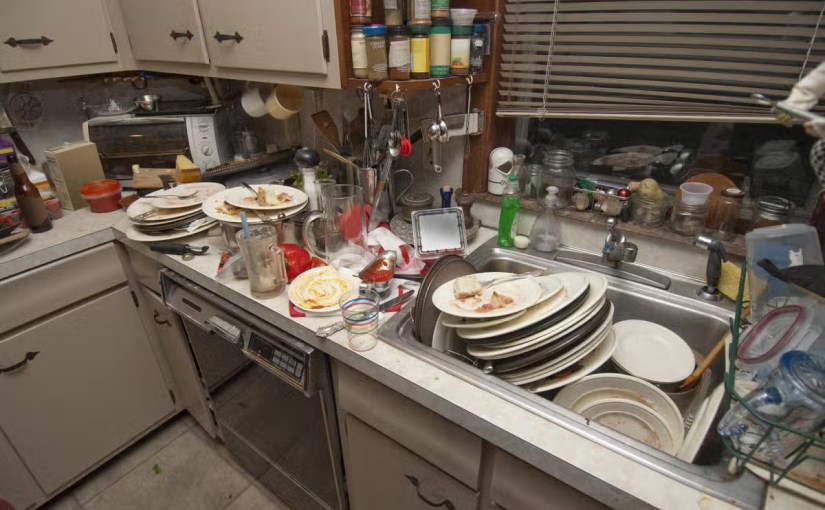
In the meantime, I found a family therapist that could work with my insurance. They live in another time zone and can do telehealth therapy with us at 7:00 pm. I have to sit at my computer ignoring the dishes piled in the sink, the cat vomit on the carpet, and Xavier’s electronic pile up in front of the TV. He’s forgotten to put out the recycling again, and the blue bin is overflowing. They suggested I reset my expectations. 

After my husband left, I cut the cleaning lady down to once a month because I couldn’t afford it. I mean, that’s what I told her. But the truth is that the whine of the vacuum cleaner sent Xavier into such a rage that he punched a hole in the ceiling. I had to ask the guy who cuts my grass to stop using the leaf blower outside because the noise disturbed Xavier’s sleep. At 3 pm.

When I traveled to Uzbekistan for work in June, I arranged for Xavier’s brother to come down from New York and stay with him, then take a train together to their father’s in Maine. I hired a teen to look after the cat, and a neighbor to keep an eye on the house. I didn’t think Xavier could function in the house unsupervised. At the time, he was off his medication completely. I’d contacted the crisis center to find out how they would deal with someone on the autism spectrum. Before my trip, I set up a special needs trust in case something happened to me. 

What happened is that Xavier refused to leave the house. He and his brother had a major fight, and his brother went back to New York. There’s a nine-hour time difference between Maryland and Tashkent, and I was fielding phone calls from both boys, my ex, and my lawyer at odd hours. Then going off to teach English with a smile on my face. I should have called the police. Then maybe my DDA Priority Category Assessment change would go through. 

My mortgage increased by $500 per month in August and it’s clear we can no longer stay in this lovely house together. So now, while working full time as a high school teacher, managing Xavier’s appointments (and moods), I will have to get this large house ready to sell by myself. You may ask where his father is in all of this. He’s still paying for half of the house. Thank God. It could be worse.

I’d like to say I’m waiting for something better to come along, but I suspect things have to get far worse before we’ll get any help.

Another Anacostia Bridge?!

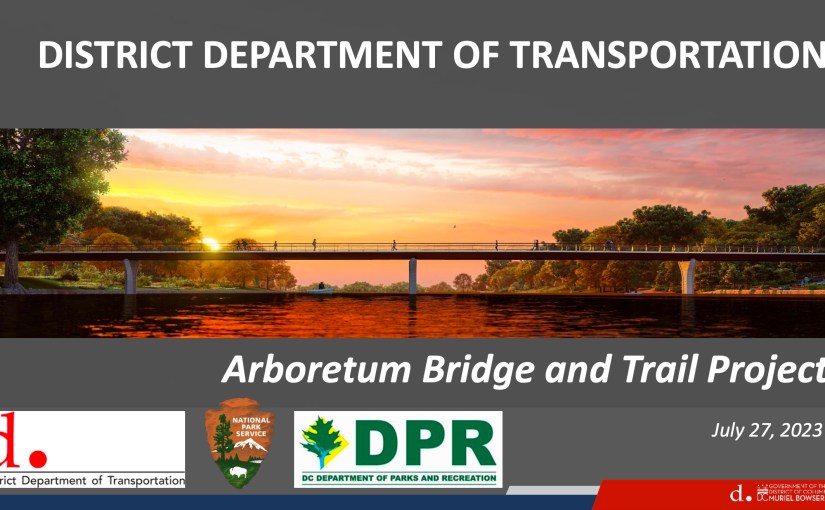
The Washington DC Department of Transportation (DDOT) and the National Park Service (NPS) have joined forces to come up with a pedestrian bridge plan that looks great on paper and has the laudable goal of uniting the two sides of DC across a unique natural area in the heart of the nation’s capital. However, all the beautiful artist renderings fail to consider the serious concerns of actual river users.

While I support the idea of improving pedestrian access to the river, the National Arboretum, and Kenilworth Aquatic Gardens, the proposed location is in the last pristine section of the river that has recently seen tremendous growth in fish, birds, and other wildlife. A true comeback story, thanks to thousands of activists who have worked tirelessly for decades toward a swimmable, fishable waterway. Drilling concrete piers into this part of the river would permanently alter the pristine natural beauty in this section of the river that people would come to appreciate.

As a rower on the upper Anacostia, I’ve witnessed the return of bald eagles, beavers, osprey, turtles, and river otters. Once we launch downstream from Bladensburg Waterfront Park, it’s hard to believe this breathtaking natural resource is in the heart of a major city. Our section of the river is so magical that the “other boat club” calls it Narnia. Some in the rowing community would like to see this area designated a wild and scenic river — granting the environmental protections that the Anacostia deserves.

Another concern is that the Anacostia River is only 10 miles long, yet it already has 11 bridges! Why can’t DDOT and NPS use a pre-existing bridge to open up the river to pedestrians? The New York Avenue Bridge is only half a mile from the National Arboretum. Why not add a pedestrian and bicycle walkway there?

The proposed bridge would place three concrete piers into the middle of the river, creating siltation that will likely degrade the quality of the water and become a safety hazard for the hundreds of rowers who use the river daily. The artist’s drawings depict an imaginary river at high tide after heavy rains, when water completely covers the mud banks. A single-span bridge design would be a better option.

Currently, the Arboretum has restricted access from 8:30 to 4:30. There is no bicycle path currently planned for the west side of the river and it is my understanding that the pedestrian bridge is not even mentioned in the Arboretum’s 10-year plan. A project that requires such a huge financial commitment and years of effort across multiple agencies should not have piecemeal development.

When the Anacostia Riverwalk Trail (ART) opened in 2016, cyclists began appearing up and down the east side of the river. While it’s great for bikers, the ART has not opened access to the river for residents interested in boating, swimming, fishing, or wading. There are few places for those on foot to stop and linger on the riverbank. Will the Arboretum bridge be another slab of asphalt that keeps potential river users at a distance?

DDOT and NPS should work harder to come up with a better plan. This is a bridge too far.

Manifesting Generator

In the summer of 2020, when I realized I would start the new school year conducting lessons from a corner of my bedroom, I bought a map of the world to hang as my Zoom backdrop. My goal was to learn all the –stans and their capitals while covering my bare wall.

Little did I suspect that, three years later, I would spend a summer in Uzbekistan (capital: Tashkent) leading professional development workshops for secondary English teachers. 

What other latent desires am I harboring? What physical manifestation can I put on my wall or bulletin board?

A distant relative (my sister’s sister-in-law, Robin Winn) is an expert on Human Design. She has written several books and conducts workshops, interviews, podcasts. She recently read my Human Design chart and revealed that I am a Manifesting Generator. What this means is that I need to respond to clear signs before taking action or else my 43-23 Freak-Genius channel causes me to blurt things out, act too quickly, and mess everything up. 

My Human Design type needs to wait for a sign. I need to be invited into relationship before my superpower can manifest itself: speaking up for other people through my throat channel. She said I must be still, wait, and gain clear focus before acting. That is the hardest part. I’ve got three weeks before school starts and my head is spinning with To Do items.

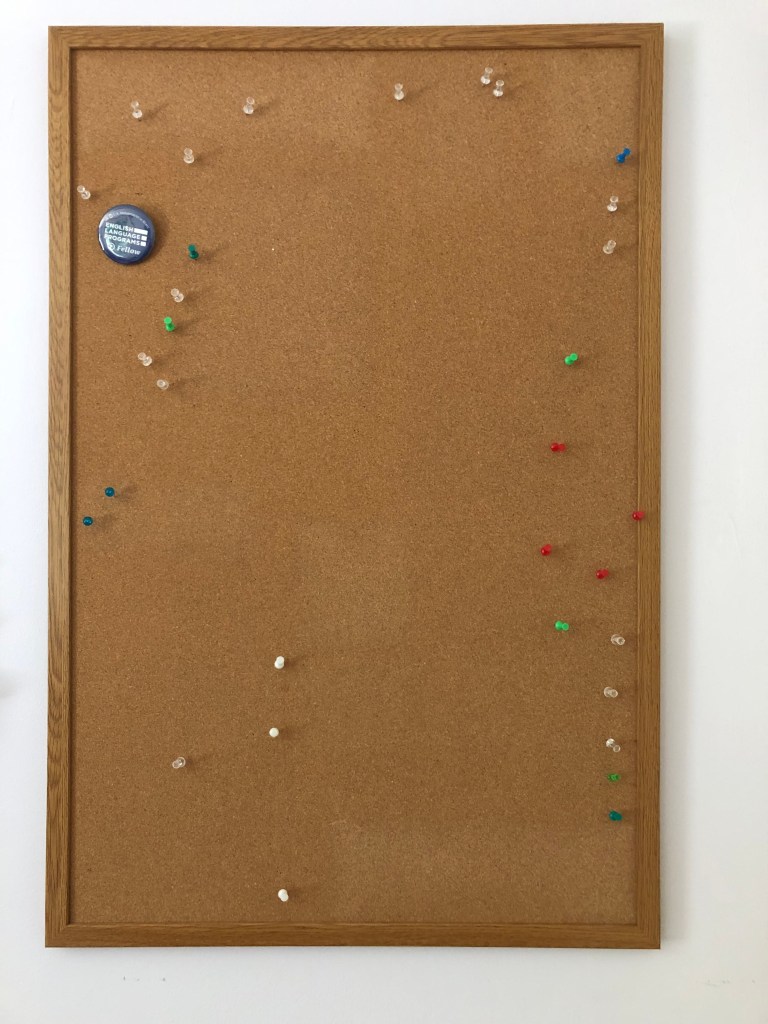
My map of the world has fallen down, due to the humidity and masking tape losing its stickiness. An old bulletin board — where I pinned my writing group schedule, comics from the Washington Post, tea bag sayings, postcards, poems, images, rowing medals, my Human Design chart — is now a blank slate.

I’m not good at these in-between moments, but Robin told me, “You touch people’s lives like a whisper.” So I’m willing to honor that stillness and wait.

I guess I have to live with empty walls and a blank bulletin board for a while.

Waiting for inspiration

The Greatest Blessing, Amity

I’ve been transported to a different world. In this world I am greeted as a celebrity. With my blondish hair and Irish nose, I am clearly not from around here. People rush to carry my heavy bag and help me get to my destination, even when we have to use Google Translate to communicate. I walk with a fellow blonde American around the lake and kids follow us just to hear what language we’re speaking. Russkiy? they ask. The only foreigners they’ve ever seen are from Russia.

As part of a huge program sponsored by the Uzbek Ministry of Education and the U.S. Embassy (mentioned in this article), 40 American English teachers will work in Uzbekistan training secondary English teachers for four weeks. Our participants are thirsty for knowledge and soak up every lesson like a sponge. I have never felt so appreciated in a classroom. The government has given them huge financial incentive to improve their English proficiency. But it’s more than that.

These teachers are joyful, resourceful, creative, professional, proud, hard-working, risk-taking, respectful, and fun.

Here in Navoiy, a small city that has defied my expectations at every turn, we are three American teachers and a site coach, each with a local counterpart, and almost 50 participants, all secondary teachers. In my class, several women commute an hour each way to get to 16 Maktab, our training site. Two sisters live on a farm far from town. All have household chores when they get home and cater to their mothers-in-law, with whom they live. It’s 104 degrees outside and the AC at full blast barely cools the room. Despite these obstacles, they show up every morning at 8:30 ready to learn.

Our facilitator’s guidebook was carefully put together by American Councils, full of resources, activities and cultural connections. Since this professional development is really a cultural exchange, it is an honor to learn about Uzbek traditions by the best cultural ambassadors in the country: teachers. On Culture Day, these women put together a two-hour celebration with little notice. They brought textiles, arts & crafts, and delicious local food that they cooked the night before. They dressed in ornate traditional outfits and put on a full show with games, music, dancing, and theatre.

When they finished, the Americans had to present something from our culture. We taught them the Hokey Pokey.

In the classroom, we present active lessons for English instruction: Running Dictation, Bicycle Chain, Mingle Info Gap, Think-Pair-Share. And we teach the language needed for them to deliver instruction completely in English. Then each week, they do a micro-teaching lesson in front of their peers. From Week 1 to Week 2, their confidence increased and they showed amazing growth. One of the things we teach is the vocabulary of encouragement. I am inspired by their eagerness and could not be more proud of this group. Good job!

This weekend, we will take a field trip to a local attraction and students will teach us the significance of this place. This town does not attract a lot of tourists, but after our class puts together a tourist brochure in English, they will certainly be ready!

In the words of Alisher Navoiy, the founder of Navoiy, the greatest blessing is amity. I am sure that our friendship will endure long after the closing ceremony.

The Motivational Speech

I was flattered that L.J. surreptitiously recorded my farewell speech to Period 3 Honors English 12. I’d just signed a dozen yearbooks and stumbled into the perfect metaphor: a rocket! Our school mascot is a Ritchie the Rocket, so I said something about using high school as a launching pad while soaring to new heights, with rocket power fueling your rise to success. I know that the metaphor was corny, but I had their full attention.

In Period 6, I read Oh, The Places You’ll Go! in its entirety. Not one student glued their eyes to a cell phone. Nobody asked to go to the bathroom while I read in my best teacher voice. You have brains in your head, you have feet in your shoes. You can steer yourself any direction you choose.

Dr. Seuss is out of favor these days. But his words fit the expectations of the moment. Something happens to seniors in their last week of school. A sudden realization that This. Is. Final. The fear, the sadness, the excitement. For 23 years, I’ve been saying good-bye to students at the end of the school year. I know my role.

This year, however, we had briefly reversed roles. Seniors wrote and delivered their own motivational speeches. We watched some model orations: a wedding toast, a graduation speech. I provided a graphic organizer, a rubric (below), and a deadline. I got some of their best work all semester.

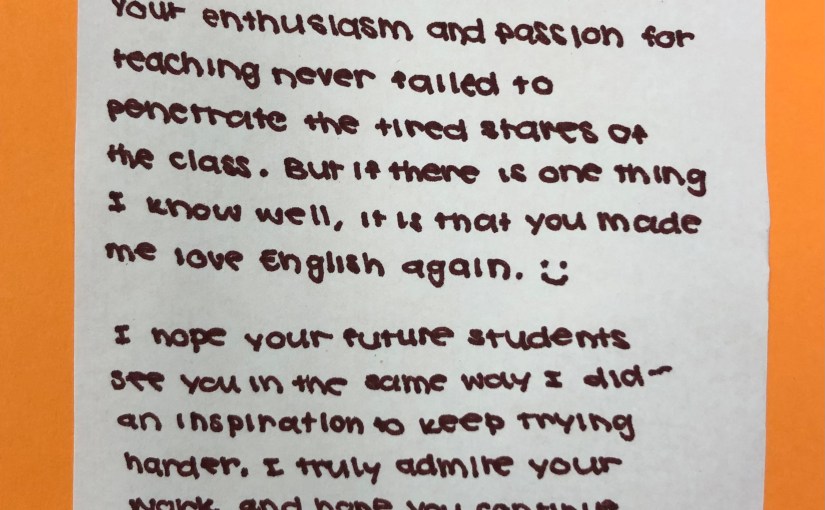
Maybe that’s why some of their final thank you cards brought tears to my eyes on the last day. I choose to believe that the self-reflection imposed by our final English 12 assignment became internalized, that students rose to the occasion. We tend to think that students are disengaged, but they pay attention to every nuance and they have something to say.

The Class of 2023 has brought back hope and a positive attitude.

A motivational speech will often end with a positive quote. Fueled by Rocket pride, my students will join the high fliers who soar to high heights and be the best of the best! I hope my words will give them a boost. I know theirs have certainly boosted me.

Change happens

I subscribe to Richard Rohr’s Daily Meditations, which I often don’t have time to read. But this morning’s missive on Transitions spoke to me.

The word change normally refers to new beginnings. But the mystery of transformation more often happens not when something new beginsbut when something old falls apart. The pain and chaos of something old falling apart invite the soul to listen at a deeper level, and sometimes force the soul to go to a new place. Most of us would never go to new places in any other way…

Transformation always includes a disconcerting reorientation. It can either help people to find new meaning or it can cause people to close down and slowly turn bitter. The difference is determined precisely by the quality of our inner life, our practices, and our spirituality. Change happens, but transformation is always a process of letting go, and living in the confusing, shadowy, transitional space for a while. Eventually, we are spit up on a new and unexpected shore…

After two decades teaching in a public school, I feel the changes that students experience profoundly. April is huge month of transition. Just as flowers burst into bloom outdoors, seniors come alive again.

This Class of 2023 has already faced “confusing, shadowy, transitional space” that started at the end of their 9th grade year and extended into their entire 10th grade year. “Change happens when something old falls apart…” Well, their worlds fell apart. Now we have the greatest teen mental health crisis we’ve ever faced. But I’m not going there.

We had a job fair at school this week. It was a great real-life connection to what we were doing in class – researching career options, creating resumes and cover letters, and preparing for “job interviews.” I thought students would be enthusiastic about the job fair. Instead, a collective meh! greeted the announcement.

I know that many are finalizing their college choice by May 1st (tomorrow is Decision Day). Many are already working or have summer jobs lined up. Once we got downstairs to the fair, I was glad to see that students went from table to table and talked to the recruiters. Afterwards I realized they were just collecting free pens, candy, lanyards, and key chains. Meh!

With just one month left of school, I feel the tide rising and lifting all ships. Senior Assassin and Promposals are in the air. In English class, I hear excited chatter as girls show each other their prom dresses. “Ms. Sullivan, which color do you like?” D. showed me a muted pink suit he’s about to purchase. Kids in team jerseys announce that varsity sports are moving to season’s end. Chronically absent students are returning and asking what assignments they’re missing. 

The rhythm of a school year forces change, ready or not. For seniors in the home stretch, a feeling of anticipation and hope fills the air. That collective meh! will soon turn into rah! as they reach the end of their K-12 education.

I can’t wait to hear which dress color A. has selected for prom, what choice P. has made about college, and if Z. will change jobs.

Advocating for EML students

I just submitted my final Quarter 3 grades, and now Spring Break begins. What a relief to have no specific travel plans. I can finally recover from an ear infection and a bad case of bronchitis that I caught at school. Never in my 23 years of public school career have I missed so many days of instruction! It was quite a scramble to get caught up after seven days with different substitutes covering my classes. Now I can breathe free before carefully planning the home stretch.

This week I testified before the MCPS Board of Education, driving home the need for increased funding to support our English Multilingual Learners (EMLs), formerly known as ESOL students. The staffing allocations are frozen on January 1st, even though newcomers continue to arrive throughout the year. Teachers serving EML students are constantly working at a deficit.

At my school – which, by most standards, is a very good school – newcomers might be placed in a resource class, art, music, or double PE class because the mainstream classes have reached capacity. This may slow down or change their graduation trajectory. Students learning English need enough trained teachers who can meet their unique language needs.

While the English Language Development (ELD) teacher is not the only friendly face for our students, we are sometimes a lifeline for newcomer families who do not know how to navigate the American school system. The ELD teacher is often the only trusted adult they know.

When our class sizes increase, students do not get the individualized attention they need. Teachers of EMLs routinely take on extra duties well after the last bell rings for dismissal. We act as counselor, spokesperson, interpreter, and advocate. But when we are stretched too thin, students suffer the consequences.

When teachers are too burned out to go the extra mile, students become disengaged in school. When the demands on ELD teachers are too great, the school system fails the neediest students in our county. Simply put: we need increased funding to pay for vital programs. ELD departments around MCPS need a reduced student-to-teacher staffing ratio.

The Board of Education will soon be voting on how MCPS programs will be funded. EMLs are the fastest-growing population in the district. They deserve teachers and programs that meet their needs.

I will keep using my teacher voice to speak out for them.

Excuse me, now, I’m going to enjoy some cherry blossoms 🌸🌸🌸

ELL Testing Madness

Friday, Feb. 24, 2023

Every January-February, teachers of English Language Learners (ELLs) give up six weeks of normalcy to conduct mandated WiDA Access testing for all K-12 students. The Maryland State Department of Education requires all ELLS to be tested in four domains every year: Listening, Reading, Writing, and Speaking. This single test determines student proficiency level, a measurement used to allocate state funding for staff, materials, and resources – and not much else.

The problem is that one, single, deeply-flawed test determines a child’s status as an English Language Learner at school. This needs to change. 

First, the results of the WiDA Access test don’t arrive until late in the school year (late May),
when master schedules and staffing allocations have already been determined. While it’s always interesting to see how my students performed on the different components, the test scores arrive too late to inform my classroom instruction.

Second, the Speaking component of the test does not really measure a child’s ability to speak English. If they have not practiced speaking into a microphone, or if they don’t know they will get cut off (with no time to go back and re-record), their speaking score is low. Sometimes this is also reflected in the classroom. But when a test measures the ability to use technology rather than what it’s designed to measure, the results are invalid. 

Before the Every Student Succeeds Act (ESSA) brought the WiDA test to our doorstep, my district used a variety of criteria to determine a child’s proficiency in English: grades, performance on non-WiDA tests (including grade-level assessments in English, Biology, Algebra, and Government), reading tests like MAP-R, and – most importantly – teacher judgment. We still use these measures to place actual children in actual classes – not their WiDA scores. 

Teachers of English Language Learners (ELD teachers) often know their students more intimately than other education professionals because we work with the same students year after year. When newcomers arrive with limited English, their ELD teachers greet them with warm smiles. Their ELD teachers become their culture brokers, advocates, counselors, and in loco parentis trusted adults. We watch them grow and gain confidence as they adapt and make friends. As soon as they achieve proficiency, we say good-bye and send them into the mainstream. 

Once they pass the WiDA Access test and are out of our domain, these ELL success stories no longer count in state data. That’s a good thing! We’ve done our jobs! But the students who do not pass the WiDA Access test will be listed as English Language Learners until they pass the test, die trying, or graduate. 

I teach in a Montgomery County High School, where seniors who have been in the English Language Development (ELD) program since elementary school cannot exit the program. Many of these are receiving special education services or have significant learning challenges. Some have documents signed by their parents refusing ELD services. They will never pass the WiDA test. In spite of the fact they have refused ELD services, we still have to give them the WiDA Access test every year. All four domains. 

We have to pull students from their regular classes – often at the beginning of a new semester, when teachers are introducing new content or the class is conducting valuable get-to-know-you activities – to make them sit for a test that has absolutely zero relevance to their educational journey, their future, or their eligibility for graduation.

Yet, Maryland State Department of Education insists that we disrupt actual student learning so that they can sit for a meaningless test. To make matters worse, teachers and school administrators must track down often-reluctant students and give up hours of their planning time in order to proctor the WiDA Access test, each component taking about an hour. 

In 2019, I charted my own missed planning periods over the course of six weeks: 18 hours. In addition to my regular duty day, I gave up 18 hours of contractual planning time to administer the WiDA test. I never got recognized or compensated or for those hours. I was expected to donate my time. Many of my elementary school colleagues basically stop instruction for the entire six weeks of the testing window! Critical services for the most-needy students basically come to a halt during the WiDA testing window in many schools. 

This has got to change. Our students deserve better. 

Note/ Addendum:

Maryland is one of 41 states that adopted the ACCESS for ELLs Test (WIDA) assessment and their aligned standards. To meet federal standards, it is a “valid and reliable source” for determining English language proficiency levels for funding purposes. Administrators say that the psychometrics of the ACCESS for ELLs test are extremely strong and yield valid and reliable English language proficiency levels that can be used to support tiered funding.

However, my point is threefold: A) that some students will never exit the program because this single test determines their “proficiency level,” B) the speaking test is problematic, and C) the disruptions to teaching and learning are extreme.

I recommend that we bring back a dashboard of criteria for students to exit the ELD program: teacher judgment, attendance, grades, performance on other tests, and the WiDA test. In addition, schools should get district help administering the WiDA test so that teachers can continue teaching during the six-week testing window. 

The quiet drop outs

It’s not shocking that the December 30th deadline for confirming my National Board Certification candidacy has forced me to ask the right questions. If I’m co-teaching two sections of Honors English 12 and teaching solo two others, which class would be best to film for Component 3? Or should I use my 7th period ELD Seminar class that has only 10 students? Should I certify in English Language Arts (the subject I’m actually teaching) or English as a New Language (my career specialty)?

It turns out that I have to scrap the videos I’ve recorded, delete the written commentary, and wait until next semester when my new schedule includes 51% English Learners in a sheltered Honors English 12 class. Teachers have to pivot all the time. Good thing I checked before spending the rest of the school year completing unscorable components. One thing, however, has come out of this frustrating process that I cannot dismiss.

The data I’ve collected on my students may not be valid for National Board Certification, but it deserves some written commentary. So here it is.

Out of the 106 students in my four classes, 30 have missed 20 or more days of instruction or they have stopped coming to school altogether. Some have withdrawn from school officially, some have switched to “credit recovery” classes online, and one had a baby. Many English Learners are working full time and miss class because they’re exhausted. But where are the other students? Why aren’t they coming to school?

Over and over again, I try to contact the students on my roster. I call home, I send an email to the counselors, administrators follow up, kids get referred to the Wellness Center, I involve the Parent Community Coordinator or the Bilingual Counselor. Some will show up once a week or two. My school and school district have wonderful resources, fully employed. But why aren’t these students coming to class?

Teachers and school staff understand why. These students are suffering from enormous mental health challenges as a result of the pandemic. It’s not just a disengagement. This year’s seniors spent the spring semester of their freshman year and 90% of their 10th grade year online. These are crucial formative years, where adolescents naturally break away from their families and seek peer friendships as they develop independent identities.

Schools have made incredible adjustments to accommodate student needs. But we must keep asking the right questions. How can we better address the experiences of high school students whose natural growth process was stunted? What new programs or new staffing can we put in place to support the whole child? School is not just for academics. We’ve known that for a long time. Why has it taken a public health crisis to begin to address this?

During the pandemic, articles about the “great resignation” began to appear. Workers seeking better jobs jumped at new employment opportunities. Now we hear about “quiet quitting,” where workers are opting out of any extra tasks outside their primary job duties (in the teachers’ union, we call this Work to Rule). High school students are paralleling what companies and employers are seeing in the workforce.

Seniors are doing the absolute bare minimum to meet graduation requirements. It’s a huge problem in the classroom when 30% of the students missed the intro lesson and we can not make progress. I have to completely re-think discussion groups or project-based assignments that require peer collaboration. What social-emotional skills are they also missing?

It’s a quiet drop out crisis. The soft skills that today’s teens will need to be successful members of society are not developing normally. We can help them if every school, every district, and every state begins to ask the right questions, gather data, and reflect on possible solutions. It would help to have a deadline.

The To-Do List

It’s that season when the newness of the school year has worn off and the workload has become almost unbearable. Possibly because, as usual, I’ve committed to absolutely everything. On top of teaching full time, I’ve joined the districtwide Labor Management Collaboration Committee and, after our October meeting, I volunteered to organize a happy hour for 300+ English Language teachers. This is on top of my monthly Building Rep duties as a member of the teachers’ union. 

This is an election year, teachers are working without a contract, and we’ve filed an Unfair Labor Practice against the school district for refusing to come to the bargaining table. The union needs to share our proposals before the Board of Education votes on next year’s budget. My role is to communicate to the teachers at my school what is happening with issues that directly impact them, and to rally their support when needed. Like wearing Red for Ed(ucation), marching to the Board offices, and handing out Apple Ballots at the Early Voting Centers. 🍎

That’s the easy part. I’m a natural activist.

I’ve co-authored a section of a White Paper for the Community WELL group, and now need to review the document before they send it to the Maryland State Board of Education. What if I’m wrong about EOY? What if that factoid that the ACLU guy popped out comes back to haunt me? Can I own it? Speaking up for students has already earned me a reprimand from my supervisor this month. Part of me thinks what have I got to lose? I’m close to retirement and part of me dreads signing my name to such a high-stakes document.

Teachers are often so afraid to speak up that I feel compelled to do it for them. 

Call me crazy, but I’ve signed up for National Board Certification – all four components in one year! People have told me it’s like being in grad school. I’m taking a support class for Component Three, “Teaching Practice and Learning Environment.” I have to videotape different lessons and write a four-page paper reflecting my knowledge of students, my knowledge of English Language Acquisition, and Instructional Practice. I’m the oldest teacher in the room. I’d love to say I’m putting myself through this torture to become a better practitioner. Honestly, I’m doing it for the money. I get a significant salary boost that figures into my retirement income. 

I’d be a fool to walk away from this opportunity. 

Because I am a teacher of English Language Learners, I’ve got to complete the mandated paperwork: Photocopy Parent Notification Letters and English Learner Accommodations forms – pink ones for the students to keep in their binders so that they can advocate for themselves in their content classes – and white ones to send home. Go over the signature lines with a highlighter and staple the two docs together so that students won’t forget one at home.  I might as well send home the video release forms for National Boards at the same time. I’ve got to monitor who’s returned the forms and motivate them to get them in ASAP. Then I have to file them in a manila folder in the office filling cabinet.

Teachers of English Learners have extra outdated, onerous duties that other teachers do not have to worry about.

The last weekend of October is a No Homework weekend so that seniors can work on their college applications – the ones that are due November 1st. The University of Maryland admits 94% of its freshman class from those early applications so it’s crunch time. My immigrant students didn’t get the message that counselors need a month’s notice to write a recommendation and send out transcripts. I’m encouraging them to send the application in anyway. And to pick a few other schools, including Montgomery College, an excellent community college, as a safety school.

Helping newcomer English Learners with college applications is intrinsically rewarding. 

Melani asked me on Friday after the bell rang if I could write her a recommendation – due  Monday. Of course! I said. She was briefly in my class in 9th grade, again in 10th grade, and now she’s in my co-taught Honors English 12 class. I love that girl! In spite of family problems, she comes to school ready to learn, she works hard, and she is the most positive and optimistic student I know. Last year – the only year she was not my student, she used to stop by and greet me with a twinkle in her eye (we were masked all year) and ask how my day was going. She seemed genuinely concerned about my response. Melani would make a great nurse or social worker. She’s that kind of caring. She probably already has a million certificates, but I think I’ll nominate her for Student of the Month again. 

Students like Melani deserve every bit of after-school support that I can spare. 

Stacks of ungraded Triple Entry Logs sit on the dining room table. I have to check the reading notes and compare what they wrote to my clipboard checks indicating what they said before entering their grades for the Literature Circle discussion. Then I have to post next week’s assignment online because I’ll be out all day Tuesday for Professional Development. I can’t forget to enter their Common Writing Task scores into the Performance Matters system so that district bureaucrats can track our Evidence of Learning, which is a state measure for student success. I can’t remember when the deadline is.

I knew this would happen. 

My to-do list has gotten impossibly long. How will I ever find enough time to complete all the work?! I keep reminding myself: This is the career I chose. These are tasks that I love. I’ve gotten exactly the courses that I requested. I love my school. But it is already overwhelming. And it’s not even the end of Marking Period 1 yet.

There’s never so much to do that I can’t write my way out of doing it. 😁