What we miss makes us stronger

During the holiday season, I miss my mother. I miss talking to her, sending a greeting card, or buying her a little gift. I miss her energy. As much as I complained about driving the 400 miles from the DC suburbs to Huntington, WV, it was our family ritual – the car loaded up with gifts, stopping near Cumberland, MD at the same McDonald’s. One year we saw Santa on a motorcycle drive past. My mother loved that.

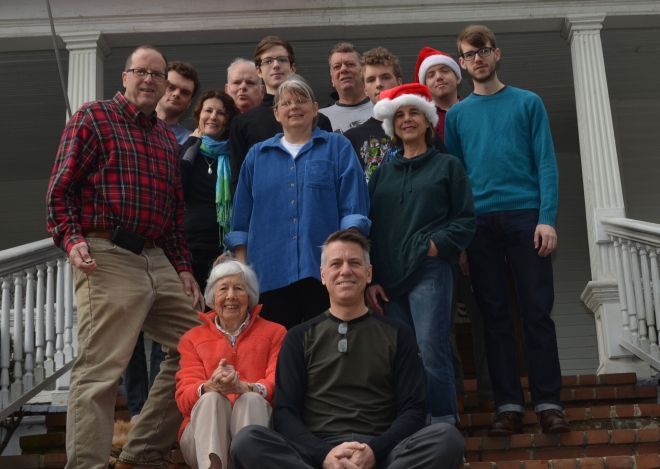
Until she passed away in 2021, we gathered at my mother’s large Victorian home on the Ohio River, 21 of us staying up late every night, enjoying board games or singing around the piano. She was never the first one to bed because she didn’t want to miss a thing. Mum put so much effort into hosting us every December — a beautiful, live Christmas tree, delicious meals, carefully-set tables, opening presents one-at-a-time so we could ooh and aah with every reveal. She thrived on having the house full of children and grand-children well into her 90s.

Robin Winn, a sort-of relative (my sister’s sister-in-law), human-design guru and author of three books, talks about “the deep, velvety essence” of Joy surrounding the holidays, a kind of collective energy that begs to be shared with all of humanity. My mother had that joy during the holidays, and I think it’s rubbed off.

After a couple of years of painful transition, I’ve internalized the decades of Mere-Mere’s Christmas joy. A new type of holiday, a quieter one, where I can experience “luminous joy” simply by being with other people in celebration, has taken hold. I decorated my house, I cooked good food, and accepted every holiday invitation that came my way. I am eager to learn more about the “awakened possibilities” that lie ahead.

I still miss my mother, but know she’ll always be with me every Christmas.

Steering Through the Muck – A Rowing Story

Two days after the presidential election, I went rowing on the Anacostia River in Washington DC. Our season usually ends after the first weekend in November, so it was a last-hurrah kind of moment before the weather grew too cold. A poignancy more pronounced by my extreme dismay over the election outcome. 

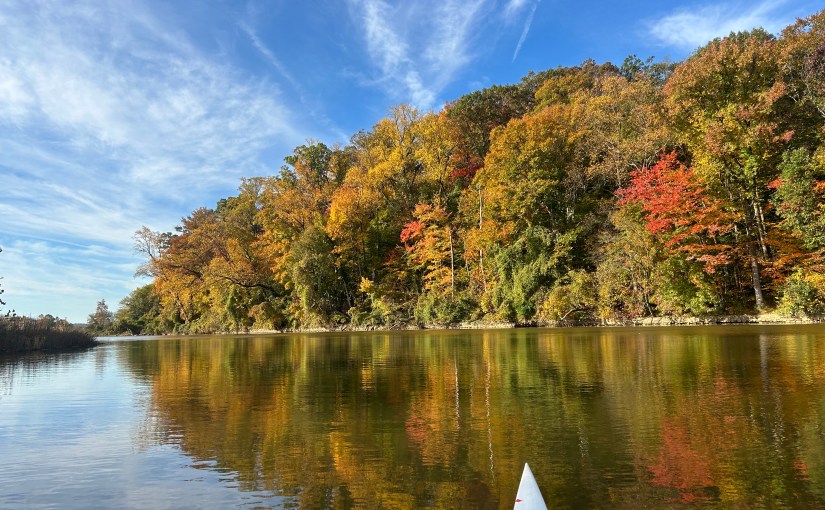
Trees along the river glowed red, gold, and various shades of green. A perfect blue sky reflected like a postcard image in the water. I rowed downriver backwards, two ten-foot oars sticking out on either side of the narrow racing shell, and considered how lucky I was to have this sport, this river, this scenic beauty, especially on a day when, like so many others, I desperately needed solace and release. 

Near the docks, a dredging barge lay in wait, ready to suck the sludge from the bottom of the river so the Bladensburg Waterfront Park harbor could still host the large Anacostia Watershed Society pontoon boats, their fleet of canoes and kayaks, and the seven different private rowing clubs that launch from the park. 

Muckraking. They were literally muckraking. 

The dredging crews have to wait until the end of the season, when high school rowing teams are finished for the year. And before river creatures begin their winter hibernation.

A transitional time in nature and a transitional time in our country.

I turned to starboard and steered clear of the enormous underwater boom marked by large orange buoys. Further downriver, I navigated through a series of Surface Water Passive Samplers that suddenly appeared (I only learned later that they were placed in the river by the Department of Energy and Environment for a multi-year being undertaken by the District to mitigate toxic sediments (https://restoretheanacostiariver.com/). Great work, but a huge hazard for boaters if improperly marked.

At the river bend just upstream from the National Arboretum, I gasped in awe. Such spectacular beauty could not be captured; I pulled my phone from its ziplock pouch to snap a photo anyway. The wall of colorful trees against a bright blue sky soothed my eyes. The rhythm of rowing calmed my nerves. They may have won the election, but they can’t take this away from me, I thought.

“How far are you rowing?” I asked Bob, who often rows a single at the same time as me. We’re the Odd Timers, a rag-tag group that goes out whenever we can get a few people together. 

“Until I forget the worries of today and prepare for the worries of tomorrow.” 

I probably need to keep rowing for four more years, I thought.

I turned around just above the Langston Golf Course and headed back to the dock. The dredging barge was still there, clearing the channel to make it navigable for the rest of the year. Then my oar hit a rebar post sticking up with no buoy or flag to indicate a hazard. It could have easily pierced my rowing shell.

I’ve been thinking about all the obstacles and chaos coming our way starting January 20. The president-elect promised to “drain the swamp.” But when you actually remove the mud, it clears the way, opens new channels, and allows water to flow smoothly downstream.

I predict a lot of metaphoric dredging booms and unmarked hazards in our future. We will all have to navigate through the muck of this new administration. When their time is over, the muckrakers will clear the path and natural beauty will prevail. Both on the river and in our country.

Co-teaching: A Dance of Diplomacy

I first met Teacher S over Zoom the year my district went 95% virtual and leadership rolled out a new instructional model for ESOL students (back then, they were still called ESOL students, instead of the alphabet soup of acronyms we use today). Under the extreme circumstances of the pandemic, it was a pleasure to interact professionally with another teacher regularly. Mostly I followed along and did pull-out groups in the Breakout room, where I could provide additional language support. I enjoyed the camaraderie of having someone to help me figure out this totally new way of teaching.

Once back in the building, co-teaching took on a different tone. Instead of equal-size Zoom boxes, one of us now had a classroom and one of us didn’t. Teacher S filled the shelves with their books and knick-knacks, the walls with their colorful posters, and rugs and furniture brought in from their house. I had a shared desk in a shared office in the ESOL Department (now called the ELD office = English Language Development). 

Only one teacher’s name appeared on the electronic gradebook and the Canvas classroom tile. That teacher received all communication from parents, counselors, and the Main Office. I was lucky if they remembered to share pertinent information about students, new policies or schedule changes. I’d been erased.

All the ELD teachers were plugging in to the content teachers’ classes, no matter their level of experience, expertise, or comfort level. That first year, I had five different co-teachers. I had to lug my cart through the hallways, moving from room to room to room, struggling to get past clusters of students before the next bell rang. 

With each teacher, I had to negotiate the space – who would stand where, who would deliver the lessons, where would I put my things? With each teacher, I had to negotiate who would prepare which lessons, who would deliver the lessons, and who would grade the student work.  I had to tread carefully with each teacher, giving advance warning that I was an interrupter, and would that be okay? Sometimes I would need to paraphrase, repeat, or clarify information for ELD students. Sometimes I would need to modify handouts so the students learning English could understand what they were reading. Each interaction was a careful conversation. 

Today, that’s pretty much how co-teaching runs for secondary ELD teachers in MCPS. We’re thrown together with other teachers and it’s on us, the ELD teachers, to adapt to the content teacher’s style, their preferences, their classrooms. If we’re lucky, our ideas and teaching style mesh perfectly, and all the little decisions we make every day will help students thrive. If not, it’s a constant negotiation of every single interaction that takes place.

Diplomacy involves give and take – that I understand. But why does it always seem like the ELD specialist has to give something up? 

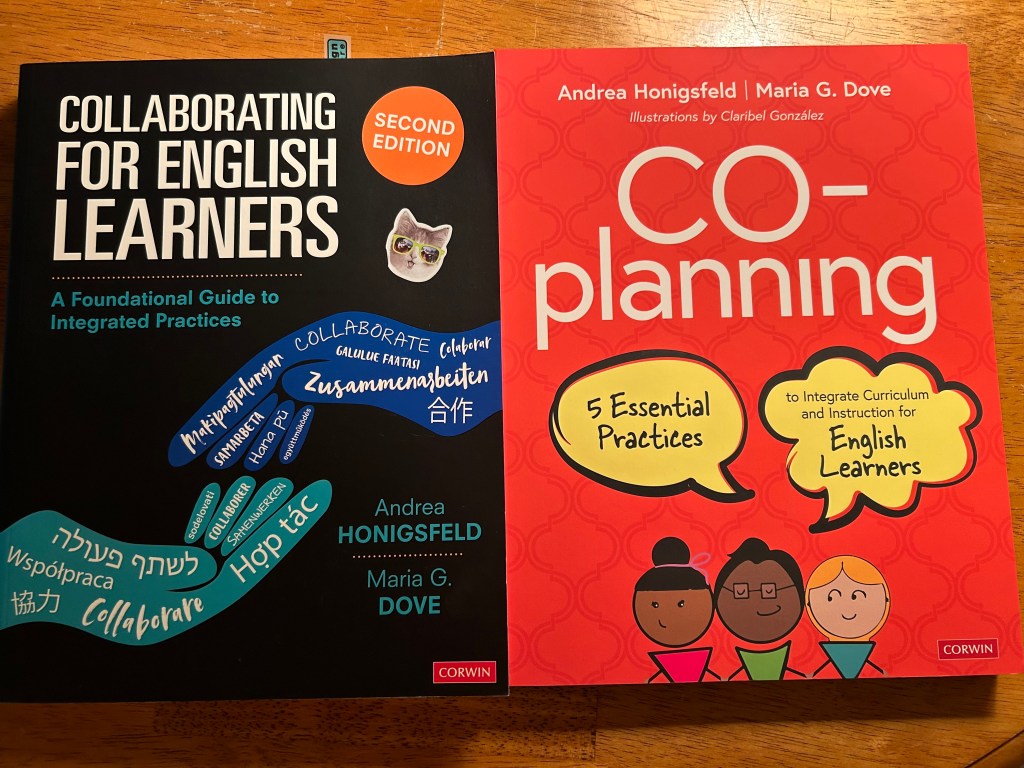
According to Collaborating for English Learners, by Andrea Honigsfeld and Maria G. Dove, teachers should “be on an equal footing” and all members of collaborative teams need “equal time to contribute to team efforts.” 

In their updated book, Co-Planning to Integrate Instruction for English Learners (2022), the same authors write “Co-planning requires teachers to change not only what they do but also how they think.” This is a critically important comment. “For co-planning to work, teachers must endeavor to share their beliefs, understandings, opinions, and convictions with fellow teachers and be open to incorporating unfamiliar ideas into their class instruction.”

It takes a certain type of professional to be flexible enough to incorporate unfamiliar ideas into their instruction. Most teachers are control freaks. Most teachers are used to being the lone voice of authority in front of children. Most are not willing to cede any territory without a fight. Or at least an exhausting series of conversations.

It’s only the third week of school, and I’ve been doing the dance of diplomacy since Pre-Service Week. I’m tired. I’ve lost my temper with my co-teachers; I’ve gotten on their nerves. I’ve succeeded in some important ways, and I’ve caved on others. 

Once the students enter the room, we smile and carry on. 

Soothing Summer Sunsets

With less than three weeks left of summer, the teacher anxiety begins to seep in. How many items have I crossed off my To-Do list? Can I still work in a trip to the beach? Have I read all the Quarter 1 core books yet? Completed my Compliance Training? Have I scheduled all my doctor and dentist appointments? Do I have an exercise/ socializing/ housekeeping plan in place that will work with my new fall schedule?

Wait! It’s not time to think about all those things yet! I’m watching the Olympics. I’m finishing novels that have nothing to do with school. I’m waking up at 6:00 am to go rowing before the heat sets in. I’m going to my high school reunion next week. I’m swimming at the new aquatic center. I’m attending live concerts and biking with friends. I’ve driven to New York City for the weekend.

Excepting the pandemic, this is the first summer in 11 years that I haven’t completed a big international trip. It has felt so unusual, so… relaxing! I’ve had consecutive days with nothing to do but read quietly in my favorite chair. It’s the first summer that I can remember feeling moments of boredom.

On August 19th, I start pre-service week at a new high school, where I’ll be co-teaching English 9 and English 12. I am looking forward to working within a larger ELD Department, meeting my new co-teachers, commuting a shorter distance, and experiencing a more collegial work environment. 

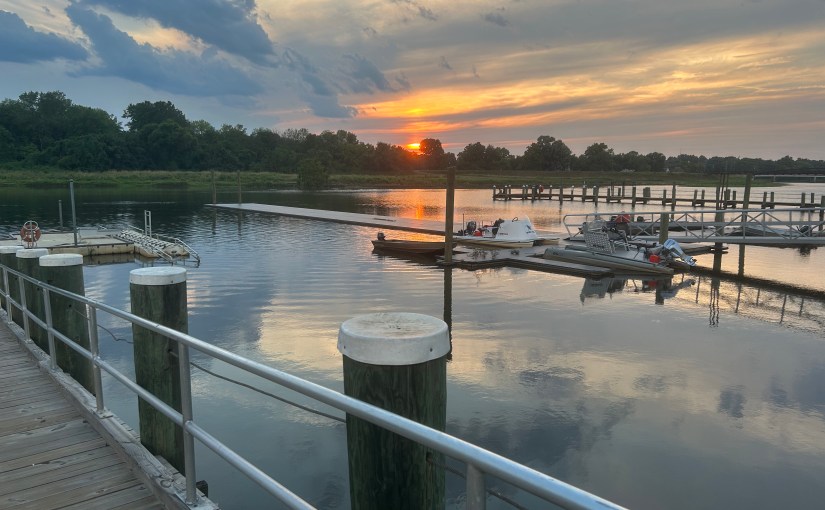
But right now, I’m enjoying every sun rise, every sun set, and every single hour in between. There’s plenty of time to get everything done.

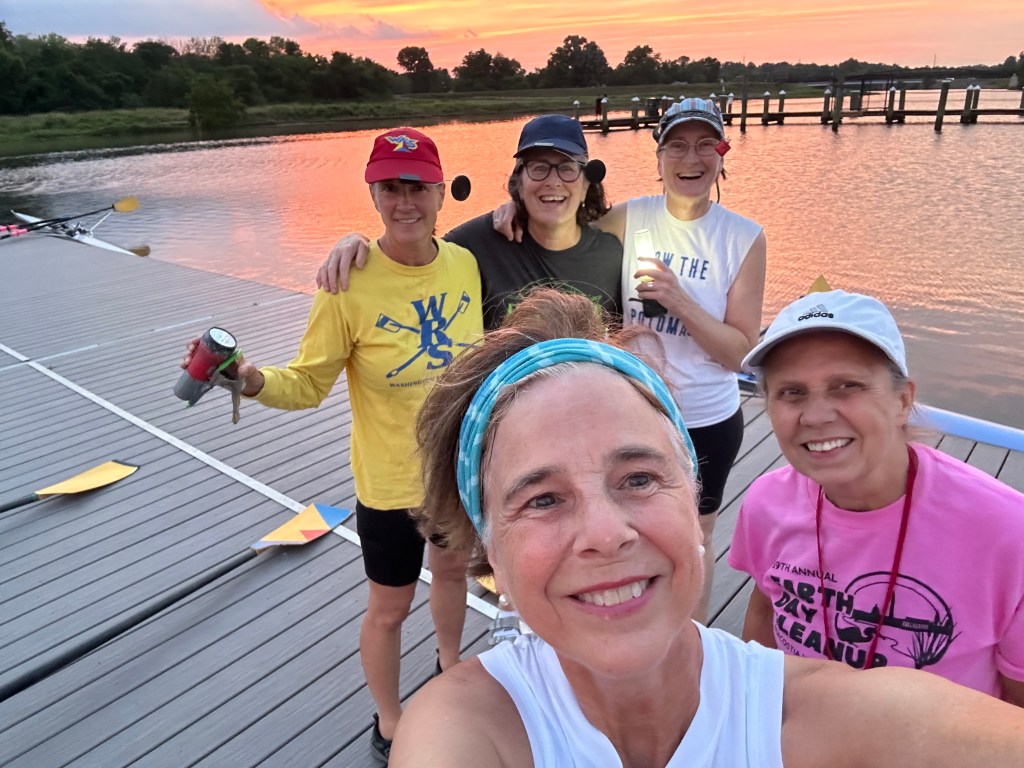
Getting ready to row under the full Buck moon, July 21

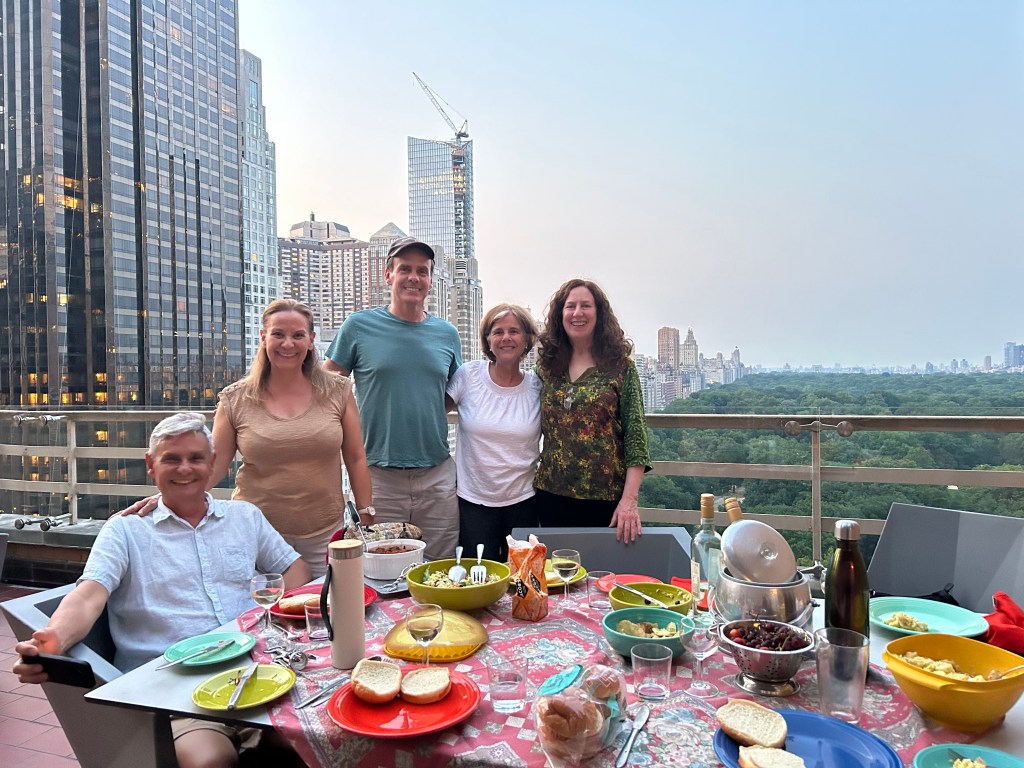
Dinner overlooking Central Park, NYC

Hawaiian Night at family reunion, June 2024

Losing my rocket boosters

It’s the first week of summer break, and I’m doing what many teachers are doing: making medical appointments, washing clothes, cleaning closets, planting petunias, and catching up on all the ignored chores that I have no time for during the school year.

After six years at Richard Montgomery High School, I’ve packed up my classroom, said good bye to students and colleagues, and posted final grades. I’m transferring to another high school in the fall. A school closer to my home with a bigger population of English Multilingual Learners. A school where, hopefully, I can soar to new heights.

I make this transition with mixed feelings. The experience of working at “a good school” is seared into my memory. In the morning, kids hold the door open for teachers as we enter from the parking lot. When disruptive students push each other in the halls, I yell, “Hey, no violence!” They apologize sheepishly and walk away. Because at RM my tone could be light – students were just exuberant the last weeks of school. 

I will miss the United Nations roster of names in my classes. Students from 39 different language backgrounds. Blonde students from Europe. Black students from West Africa. Afghani students with powerful stories. Regular kids who have a job after school, drive their own car, or play on a state-champion sports team. Students who occasionally question my assertions (they’re paying attention!). Students who say thank you.

I will miss the principal fly-bys, and our micro relationship-building sessions. The conversations with my English Department colleagues as we pass in the hallways or wait for the bathroom. My fellow ELD teachers who helped propel me through the worst school year of my life. The one-to-one chats with teachers from other departments who sought me out as MCEA union rep. The committees I served on. Working with the Career Coach or the senior class sponsor. Attending Prom.

All these memories empower me, but I know it’s time to move on. I appreciate everything that I’ve learned at RMHS and the support that I’ve been given. I’m ready for a new challenge.

Sometimes a Rocket has to lose its boosters before it can reach higher altitudes.

The Pronoun Thing

Tuesday, April 30, 2024

Over the past couple of months I’ve interacted meaningfully with different groups of friends: friends I’ve known for decades, friendly neighbors, fellow rowing enthusiasts, and brand new acquaintances. Almost invariably, our conversations digress to politics. It is an election year, after all, and we live a few miles from the White House. 

“We live in a bubble here in the DC area,” they say. “Away from the big cities, Trump is still very popular.” National politics is our local politics, and we all have opinions. 

“Democrats are losing the culture wars,” they say. “By focusing on LGBTQ-plus issues, they’re losing mainstream Americans.”

“So you don’t support LGBTQ rights?” I’ll challenge. 

“Of course I support the rights of trans and LGBTQ people!” they huff indignantly. “But I draw the line at all the pronoun stuff.”

The first time it happened, I looked on in disbelief. My liberal, progressive DC friends can not handle the reality of LGBTQ+ rights, no matter what they profess. 

Let me tell you up front that we are all in our late 50’s or 60’s. Older adults. Many of my friends are retired. I still work full time teaching high school.

“They is a plural pronoun; it should not be used as a singular.”

“Right! And putting the pronoun in the signature is so ridiculous!” they say. “Why do we need that? It’s usually so obvious if you look at the name!”

I felt this way seven or eight years ago. As an English teacher, I struggled mightily with this issue – especially with English Language Learners, who need to learn the rules of grammar. 

Then in 2016, my first trans student began their transition right in front of me. She became he. He became they. I kept messing up their new name and using the dead name, each time apologizing for the brain fart.

That student’s name in my online gradebook was a very girly name. This was before the MCPS policy allowed students to determine the name that appeared on teachers’ rosters, before we asked for their pronouns in the first week of school, before my direct supervisor signed her name Mx, before one of the first LGBTQ studies classes in the district was held in my shared classroom and I saw first-hand what it meant to be a student from a traditionally-marginalized background.

The face that stared at me with bright blue eyes was a girl’s face, now with short hair and a crocheted rainbow hat. The pudgy body slumped in giant rainbow t-shirts. Combat boots. Since then, I think I’ve had a trans kid in my classes every semester.

“But it’s so disrespectful of their identity to use the wrong pronoun! It’s like purposefully mispronouncing someone’s name because you can’t be bothered to learn it!” I tried the direct approach with my friends. “Or using a detested nickname instead of their real name.”

In MCPS, students are allowed to self-identify their gender as male, female, or X-Nonbinary. They are allowed to use bathrooms and locker rooms “in alignment with their consistently asserted gender identity.” I support this. My friends do, too. Or at least they say they do.

So why do my older DC friends draw the line at the pronoun thing? 

Back in the early 70’s our parents balked at calling a woman Ms. instead of Miss or Mrs. We argued that it was nobody’s business – especially when first meeting a young woman – if she was married or single. Gradually this honorific gained widespread use, and now it’s a normal form of address. 

Maybe that’s the argument I need to use with my friends. However, I do not feel qualified to take on this issue. I’m not LGBTQ; I do not have any immediate family members who identify this way, but I am an ally. I have a unique perspective that I feel compelled to share.

Now MCPS promotes inclusive LGBTQ curriculum, staff training, and Pride Town Halls. I’m proud to be part of a progressive school district that is at the forefront of affirming the rights of gender non-conforming students. Even using that terminology is something I did not do eight years ago. 

According to a recent Gallup Poll, only 7.1% of Americans identify as LGBTQ+ but among Gen Z kids, it increases to one out of five. My students took a poll and thought it was almost 30 percent! I think our perception of this issue is strongly influenced by who we surround ourselves with. I am privileged to work with young people every day and can sometimes see the world a little bit through their eyes. 

This is my chance to influence my Baby Boomer peeps. “Be kind,” an older colleague reminded me when I presented my case to her. “They don’t work with teens every day, and they probably just don’t know how important it is.” I’ll go with that.

This blog is my first stab at addressing the often-confusing, ever-changing language around gender identity. I hope I haven’t messed it all up.

(she/ her)

Spring Broke

With a nod to my friend Amy, I appropriate her lament for teachers on Spring Break this year. I didn’t have any money to spend on a trip to the Bahamas or Hawaii, which has turned my holiday into an inexpensive, productive, and fun week.

Being broke has an upside. I reached out to friends I haven’t seen in ages – including Amy, who I ran into while walking her dogs in Wheaton Regional Park. Then I met her for drinks at a sponsored event that several local elected leaders attended. Free food! Great way to catch up on each other’s news. We also shared our diverging answers to the question, “How are the kids these days?”

The kids are definitely better this year than last, but a lot of my seniors simply didn’t submit the in-class essay, the biggest grade of the marking period, even though they were given plenty of time, advance notice, and open-notes formatting. Several sat in class for two days with their heads down instead of writing. Amy teaches middle school and has different issues – disrespectful behavior from dysregulated students and social promotion policies that thwart any efforts to hold students accountable for showing what they’ve learned.

It’s been rewarding to cross items off my enormous To Do list. Dentist appointment, filing taxes, dealing with my son’s car insurance and maintenance ($$$). I’ve also spent a lot of time on school work: creating materials for a MCPS curriculum-writing project, meeting with that team, and grading student assignments. But the most rewarding aspect of my Spring Broke has been reconnecting with friends. Cherry blossoms, museums, and hiking don’t cost much in the DC area. I feel so lucky to have friends who like those activities, too.

A long-term sub in my department was asking about entering grades in Synergy (our online grading platform), and when I showed her what I do, she responded, “That’s so much work!” With just two more days left of spring vacation, I turn to all the unfinished tasks. Fortunately, my stay-at-home plans this year have allowed me to save money, make huge progress grading essays, and share many little fulfilling conversations that will sustain me as we push to the end of the school year. Oh! And I got to see some provocative art!

This space intentionally left blank

February has always been a month of quiet reflection for me. Like the flowers waiting underground in front of my house, I lie dormant until just the right moment. That doesn’t mean I’m sleeping; it just means that beneath the surface I’m gathering strength to push my green shoots into the world.  

February is when MCPS schools get their staffing allocations for next year and begin posting jobs. Teachers start sending out resumés, scheduling interviews, and reaching out to their network of colleagues at other schools. The Job Fair is virtual this year. Is this the year to look for another job? 

February is when I set my intentions for the summer and the rest of the year. What happens if I declare my intention of leaving my current school and nobody hires me? Like the crocuses that bloom too quickly, I will become frozen and fail to bloom.

If so, there’s always next year.

I have a dream

“It would be fatal for the nation to overlook the urgency of the moment.” MLK, 1963 speech

I have a dream that from my perch just 12 miles from the National Mall where Martin Luther King delivered his famous speech, my voice will make a difference. When I speak out, there’s always the possibility that I will be reprimanded or silenced like the four teachers in my school district placed on Administrative Leave for their social media posts this semester. I’m putting my dreams to the test this year.

While I am not vocal about my concerns for Palestinians, I speak up for English Language Learner students and for fellow teachers who support them. Sixty years since MLK urged fellow citizens to work together, we are still urging our leaders to work with us to preserve the dignity of our students. While Republicans in Iowa caucus for their party leader, they are vilifying immigrants who flee violence and persecution, hoping for a chance at the American Dream.

Fortunately, I work in a state that welcomes newcomers. I work in a district that supports English Language Learners. Yet, I speak out for conditions that need to be improved: curriculum that matches student needs, small-enough classes to support language learning, teacher workload that’s manageable, and more collaboration between administrators and teachers.

With the Blueprint for Maryland’s Future beginning to shape instruction across the state, now is the time to speak with school leaders and administrators. I am honored to be meeting with Interim State Superintendent, Dr. Carey M. Wright, as a member of Community WELL, a grassroots advocacy organization. We hope to open a dialogue that can help shape teaching and learning in the state of Maryland for years to come.

In addition, I am delighted to work with MCPS Curriculum and Instruction team to help provide differentiation options for EMLs in the Grade 10 English Language Arts curriculum material.

In the pit of my stomach, I’m nervous about speaking up. I’ve been invited into conversations at a higher level; I hope I represent my students and fellow teachers well. What if I say the wrong thing? What if they actually listen to me?

“We cannot walk alone.” (MLK, 1963)

School administrators – I could never do that job!

I couldn’t do it. The job of a high school administrator is unrelenting and thankless. 

Sure, teaching is a super challenging profession. But teachers get to build relationships with students, we get the rewards of watching their eyes grow wide with aha! moments. We get to help them with after-school activities and college applications. At the end of the year, we receive hugs and thank-you notes. 

Administrators are the real heroes of a school. 

They set the tone with their policies, procedures, and presence. Administrators deal with district bureaucracy, angry parents, underperforming teachers, and troublemaker students. They deal with the cafeteria, cleaning staff, bus transportation, athletic fields, and finances. They observe teachers and write formal evaluations. On top of that, high school principals and assistant principals supervise every football game, school play, and special activity. Everyone blames them when something goes wrong or they’re unhappy with a situation.  

My principal shares her praise for school teams regularly on social media. She’s everywhere all the time with something positive to say. Even with an excellent leadership team, the job is alarmingly stressful. It’s no wonder that three MCPS high school principals are retiring in the middle of the school year (Clarksburg,Seneca Valley, and Walter Johnson).

During the month of October, ten different bomb threats disrupted our schools, causing fear and chaos. Rapid admin response can save lives. We learned later that seven of those bomb threats were called in by a 12-year-old boy. School principals quickly communicated to the community via social media and email. Yet, people criticized their slow communication and response. I cannot imagine herding 3,000 students into a stadium in an orderly manner.

At my high school, we had two major mental health crises that disrupted teaching and learning last month – one occurred on the Friday of Spirit Week, when students were scheduled to attend a pep rally in the stadium at the end of the day. Instead of cheering for the homecoming team, we went into lock down until the bell rang, after an ambulance had quietly hauled the student away. 

This week, a student brought a loaded gun to school. Administrators and police handled it effectively before teachers or staff even knew that anything was going on. At the end of the day, the principal invited us to a meeting in the cafeteria to explain what happened. We are so fortunate to have excellent leadership at my school, but teachers and parents still complain. 

As one of the elected Building Representatives for MCEA, the teachers’ union, I helped craft a school climate survey sent to our 200 members. Despite our focus on “shared responsibility” very few staff responded, but the ones who did complained that “administrators need to be present in the hallways” and “we need better communication.” 

I teach at one of the largest high schools in the state of Maryland. We have one principal and three assistant principals, plus a handful of staff in leadership roles with walkie-talkies. How is it possible for six or seven people to supervise the hallways while dealing with all the crap they deal with every day? And those are just the situations that I know about.  

Schools have the responsibility of dealing with all of society’s ills, but so many of us feel completely unprepared. I stand in the hall and brightly encourage wandering students to get to class. If I speak using the wrong tone, a dysregulated kid could turn their rage on me. Then what? We need each other’s support – teachers, parents, students, and administrators. 

My admin team is doing a great job and they deserve our thanks. I could never do that job! Now get to class! The bell just rang!