It could be worse. I have a roof over my head, a job, a reliable car. My neighborhood is a steady source of comfort and fun, whether I’m walking the hills after school or meeting up for a book club discussion. But my coping skills in the face of my son’s disability are undoing me, while all the promised supports remain unfulfilled.
Since his father left two years ago, my adult son – let’s call him Xavier, after the name I wish I’d given him at birth – has fallen into a deep, debilitating depression. On top of his autism spectrum disorder, this has been a devastating turn for our newly-configured family of two. I’ve learned to tiptoe through the house after school because his night-day reversal makes it impossible for him to maintain a normal routine. When I smell sausage cooking at 3 am, at least I know I’ve got a few hours before a wellness check is needed.
For two years, I have launched hundreds and hundreds of phone calls, emails, and in-person visits to agencies and individuals designed to help me deal with Xavier’s rages, poor eating habits, insufficient exercise, medication management, and lack of meaningful work. I’ve kept track of every contact on narrow-ruled notepads.
He’s got full eligibility for Developmental Disabilities Administration (DDA) services, and is now on their Wait List. Because he qualifies, a service coordinator has been appointed to help navigate the system. In her six years on the job, she’s never seen anyone move off the Wait List.
I’ve applied for Supplemental Security Income (SSI) benefits through the Social Security Administration. They needed an updated neuro-psychiatric evaluation, which occurred over several days and cost me $3000. I sent in supporting letters from therapists, doctors, and licensed clinical social workers who had worked with him over the years. A worker in DC was handling the SSI application because, she said, Maryland was backlogged by 20,000 cases. She told me, “pack your patience.” SSI turned him down. Now I’ve appealed the decision and contacted a lawyer.
The Division of Rehabilitation Services (DORS), a Maryland Department of Education agency, has allotted Xavier full support status. He met with a vocational specialist there and completed the three-day career assessment inventory they recommended. Then she retired, and it took months to get another appointment. Appointments in most places occur between 9:00 am and 5:00 pm. Xavier could not get out of bed for the next few appointments.
I’ve put Xavier on the county wait list for HOC housing, found another agency that allotted 140 hours of respite care. So far, he’s slept through every appointment. I called his insurance provider. Immediately post-pandemic it was impossible to find a Medicaid-funded therapist with availability.
Dozens more phone calls and emails got him into a Medicaid-funded wellness center, where he got monthly therapy with a practitioner he liked. Then that guy retired. The new guy has not earned Xavier’s trust or my respect. But at least Xavier got an updated anti-depressant prescription. Who knows if he’ll actually take the medicine.
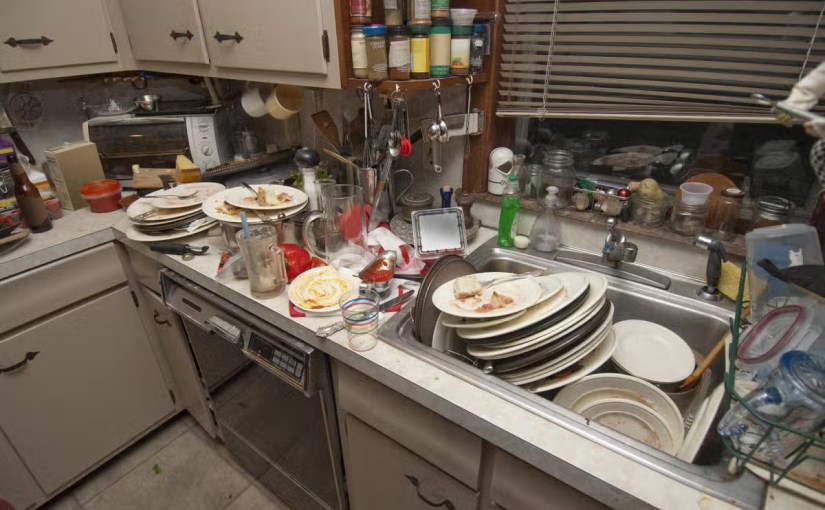
In the meantime, I found a family therapist that could work with my insurance. They live in another time zone and can do telehealth therapy with us at 7:00 pm. I have to sit at my computer ignoring the dishes piled in the sink, the cat vomit on the carpet, and Xavier’s electronic pile up in front of the TV. He’s forgotten to put out the recycling again, and the blue bin is overflowing. They suggested I reset my expectations.
After my husband left, I cut the cleaning lady down to once a month because I couldn’t afford it. I mean, that’s what I told her. But the truth is that the whine of the vacuum cleaner sent Xavier into such a rage that he punched a hole in the ceiling. I had to ask the guy who cuts my grass to stop using the leaf blower outside because the noise disturbed Xavier’s sleep. At 3 pm.
When I traveled to Uzbekistan for work in June, I arranged for Xavier’s brother to come down from New York and stay with him, then take a train together to their father’s in Maine. I hired a teen to look after the cat, and a neighbor to keep an eye on the house. I didn’t think Xavier could function in the house unsupervised. At the time, he was off his medication completely. I’d contacted the crisis center to find out how they would deal with someone on the autism spectrum. Before my trip, I set up a special needs trust in case something happened to me.
What happened is that Xavier refused to leave the house. He and his brother had a major fight, and his brother went back to New York. There’s a nine-hour time difference between Maryland and Tashkent, and I was fielding phone calls from both boys, my ex, and my lawyer at odd hours. Then going off to teach English with a smile on my face. I should have called the police. Then maybe my DDA Priority Category Assessment change would go through.
My mortgage increased by $500 per month in August and it’s clear we can no longer stay in this lovely house together. So now, while working full time as a high school teacher, managing Xavier’s appointments (and moods), I will have to get this large house ready to sell by myself. You may ask where his father is in all of this. He’s still paying for half of the house. Thank God. It could be worse.
I’d like to say I’m waiting for something better to come along, but I suspect things have to get far worse before we’ll get any help.

 Eva K. Sullivan